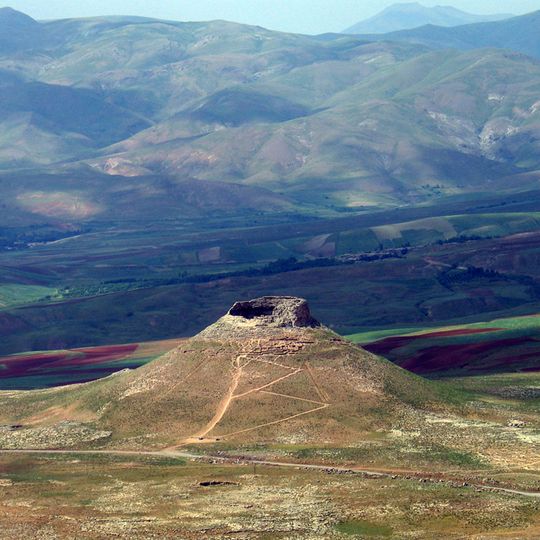
Zendan-e Soleyman, Dormant volcano and shrine in Chaman Rural District, Iran
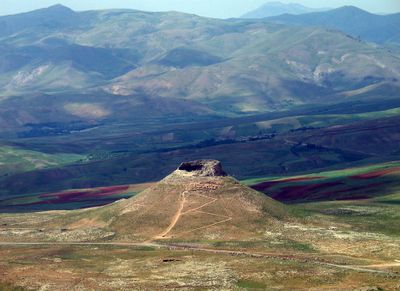
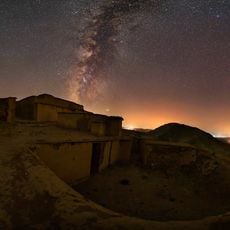
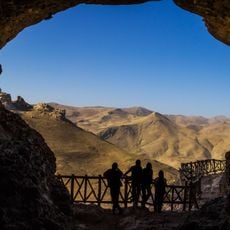
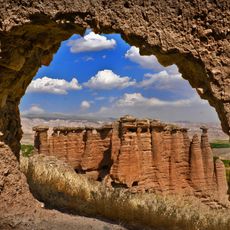
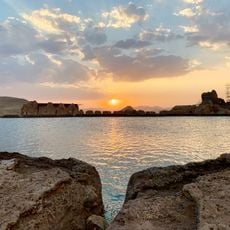
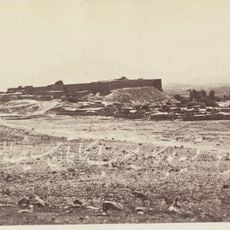
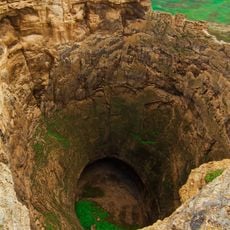
Zendan-e Soleyman is a conical mountain in Chaman Rural District that rises roughly 97 meters above the surrounding plain and stands at 2,254 meters elevation overall. A deep crater marks the summit, surrounded by distinctive limestone deposits that shape the mountain's appearance across its slopes.
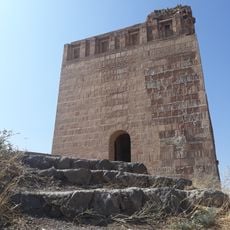
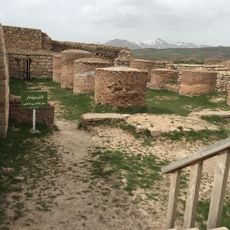
Between the 5th and 7th centuries during the Sassanid period, this site served as a significant sanctuary for Zoroastrian practitioners. Its role as a sacred place in ancient times continues to influence how people understand the mountain's historical importance.
Local communities connect this place to King Solomon through Persian mythology, where he supposedly imprisoned supernatural beings in the crater. Visitors walking the slopes can sense how deeply this legend shapes the way people relate to the mountain today.
A 15-minute hike from the Takab road brings visitors to the crater rim, where the elevation reaches 2,254 meters (7,397 feet). The path requires sturdy footwear and careful footing as the terrain is uneven, though the walk is not technically difficult.
Despite its appearance, this formation developed through artesian springs rather than volcanic eruptions. The limestone deposits created by these underground water sources shaped the remarkable structure that visitors encounter today.
The community of curious travelers
AroundUs brings together thousands of curated places, local tips, and hidden gems, enriched daily by 91,978 contributors worldwide.