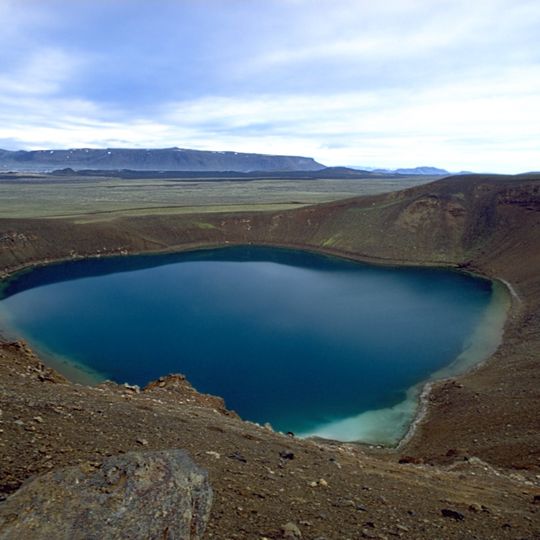
Krafla, Volcanic caldera in Skútustaðahreppur, Iceland
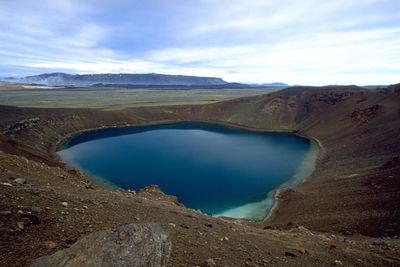
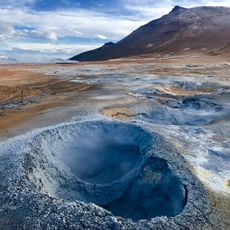
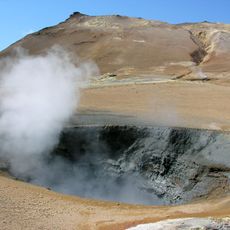
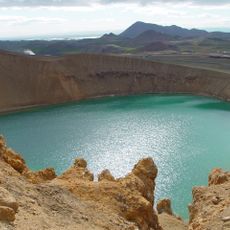
Krafla is a volcanic caldera in northern Iceland spanning roughly 10 kilometers across, with an elevation of 818 meters and multiple craters scattered throughout. The area displays dark basalt flows and lighter rhyolite rocks that reveal the complex geological makeup of this geothermal zone.
The region experienced intense volcanic activity between 1975 and 1984, with nine separate eruptions that reshaped the landscape through new lava flows. This cycle of activity made the area a key location for understanding modern volcanic and tectonic processes in Iceland.
The Krafla area maintains significance in scientific research, allowing geologists and volcanologists to study magma chambers and tectonic plate movements in Iceland.
The terrain is rough and rocky, so sturdy footwear is essential when exploring the crater landscape. A nearby geothermal power station demonstrates practical use of the volcanic energy and provides context for understanding how the site functions today.
Scientists drilling deep into the volcanic system discovered molten rhyolite magma at roughly 2 kilometers depth, an exceptional find in Iceland. This discovery opened new pathways in geothermal research and turned the area into an international focal point for volcanic studies.
The community of curious travelers
AroundUs brings together thousands of curated places, local tips, and hidden gems, enriched daily by 91,121 contributors worldwide.