Goðafoss, Waterfall in northeastern Iceland
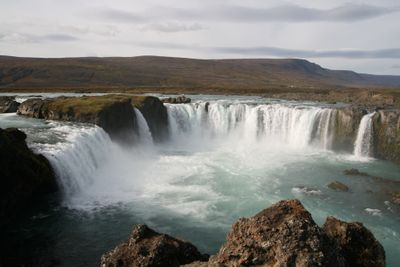
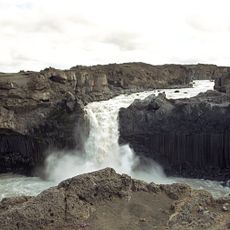
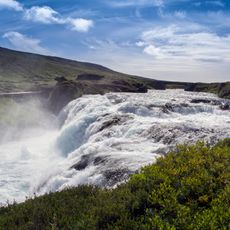
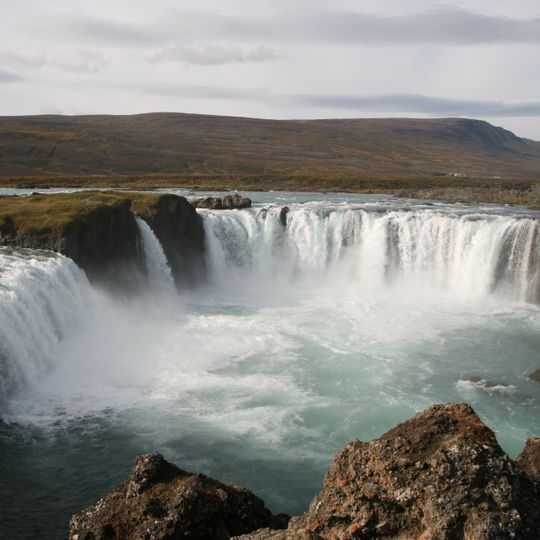
Goðafoss is a waterfall in northern Iceland where the Skjálfandafljót River drops water across roughly 30 meters of width over volcanic rock in multiple stages. The cascades form where the river descends at different heights, creating a distinct horseshoe pattern.
The story that lawspeaker Þorgeir Ljósvetningagoði threw his statues of the Norse gods into the falls after the Alþingi adopted Christianity in 999 or 1000 appears in no medieval source; Ari Þorgilsson's Íslendingabók records Þorgeir's role but not the throwing. The tale was published in Denmark in 1879–1882 and is regarded as a nineteenth-century fabrication. A window in Akureyrarkirkja in Akureyri depicts it. The falls were granted protected status on 12 June 2020 by environment minister Guðmundur Ingi Guðbrandsson.
The name can be read as "waterfall of the goð (gods)" or "waterfall of the goði (chieftain)"; linguist Svavar Sigmundsson links it to two crags at the falls that resemble pagan idols. The tale of Þorgeir throwing his idols here was published in Denmark in 1879–1882 and appears to be a nineteenth-century fabrication, yet a window in Akureyrarkirkja in Akureyri depicts it.
Goðafoss lies on the Ring Road (Route 1) where the Sprengisandur highland track begins, about 45 minutes' drive from Akureyri, near the village of Laugar. A 1.8-mile trail loops around the falls, giving views from both banks. The site has little shelter, so bring windproof and waterproof clothing.
The water originates from a large glacier far to the south and carries sediment that gives it a gray-blue color. This coloring makes the waterfall particularly photogenic and appear different depending on light conditions.
The community of curious travelers
AroundUs brings together thousands of curated places, local tips, and hidden gems, enriched daily by 94,669 contributors worldwide.