Laki, Volcanic fissure and crater row in Vatnajökull National Park, Iceland
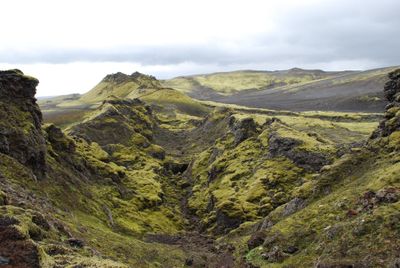
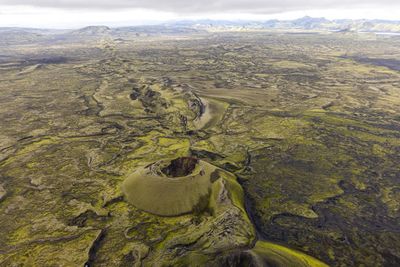
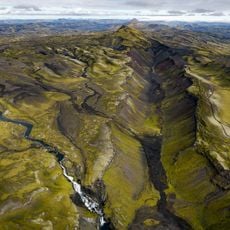
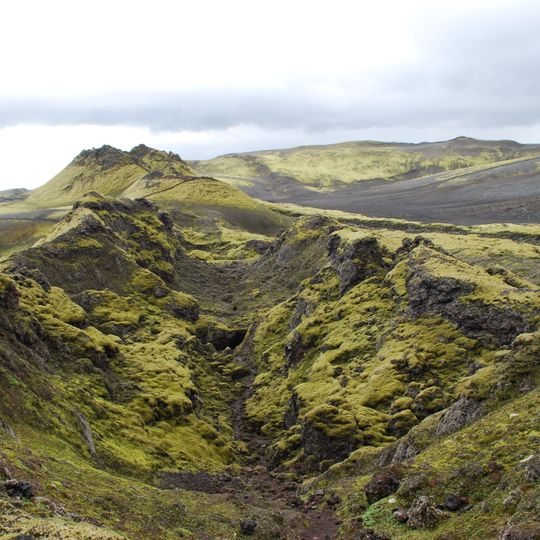
Laki is a crater and fissure system in Vatnajökull National Park that runs through the southern Icelandic highlands at an elevation of 2,660 feet (800 meters). The crater row forms a long line across dark lava fields, with each cone showing different shapes and sizes.
On 8 June 1783 a 25 km fissure of at least 130 vents opened between the Mýrdalsjökull and Vatnajökull glaciers, erupting until 7 February 1784. It produced about 14 km³ of basalt lava and 120 million tonnes of sulfur dioxide, and the resulting haze caused crop failures across Europe.
The pastor Jón Steingrímsson served the church farm at Kirkjubæjarklaustur, which a branch of the lava flow approached in July 1783 while his congregation was inside. The flow stopped short, and the spot was named Eldmessutangi, "Fire Mass Point", after the eldmessa he preached. He published his sermons and reports as Eldrit in 1788, and a chapel in the village commemorates him.
Reaching the site requires driving on rough highland tracks that open only in summer and demand a four-wheel drive vehicle. A ranger hut nearby provides basic information and orientation during the warmer months.
The fissure eruption created more than one hundred separate cones that stand today along a straight axis. Some craters have grown moss, while others remain completely bare and black.
The community of curious travelers
AroundUs brings together thousands of curated places, local tips, and hidden gems, enriched daily by 92,356 contributors worldwide.