Eldfell, Cinder cone volcano in Vestmannaeyjar, Iceland
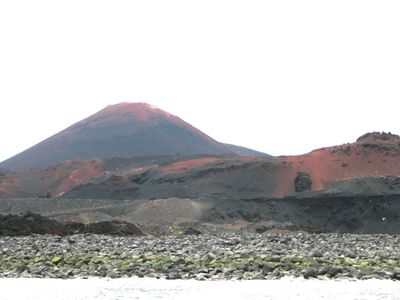
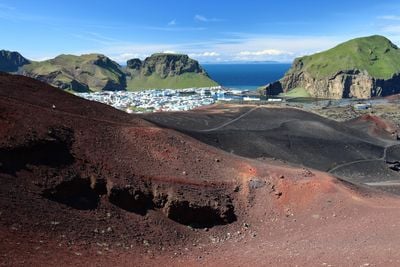
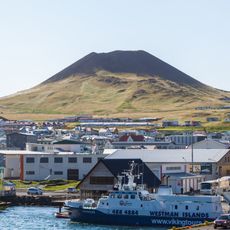
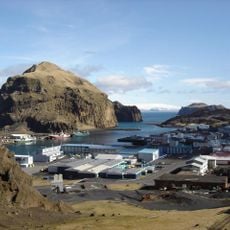
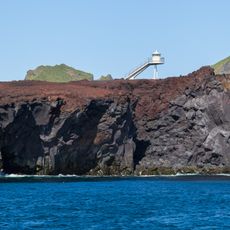
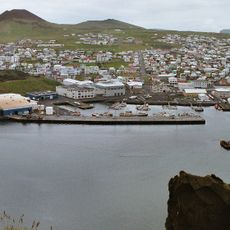
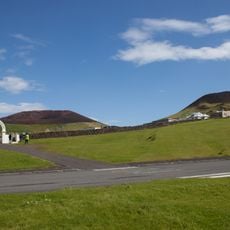
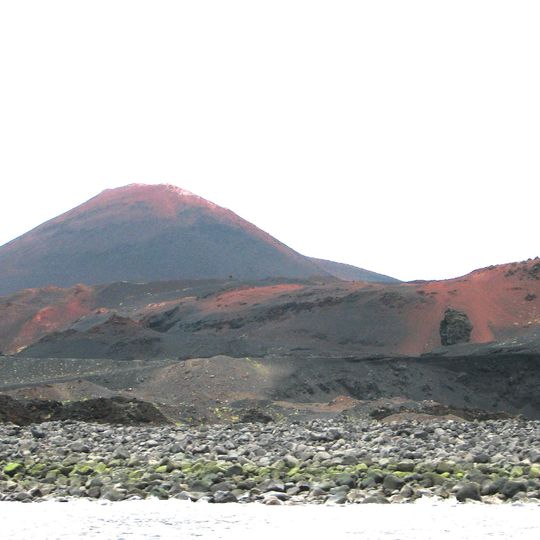
Eldfell is a cinder cone on Heimaey island, rising above the harbor and town buildings below. The dark basalt slope leads up to a wide crater at the top, where warm rocks and volcanic ash remain underfoot.
The volcano erupted on January 23, 1973, when a fissure opened overnight and lava began flowing toward the town. Residents evacuated within hours by fishing boat, while the eruption continued for five months and built a new mountain.
The volcano's name means "Hill of Fire" in Icelandic; the official naming committee chose it over the local preference Kirkjufell (Church Mountain), despite opposition. After the eruption, islanders drew hot water and electricity from the slowly cooling lava, and used the tephra to extend the airport runway and as landfill for 200 new houses.
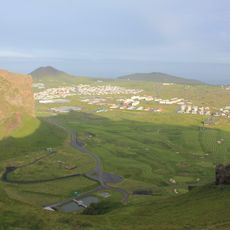
Several trails lead up from town, with steeper sections requiring sturdy footwear and loose ash making the path slippery when wet. The climb takes about half an hour and offers views over the harbor and surrounding Atlantic cliffs.
The lava flow expanded the island and narrowed the harbor entrance at the same time, making the harbor safer from storms. Pumps sprayed seawater onto the advancing lava for weeks to change its direction and save buildings.
The community of curious travelers
AroundUs brings together thousands of curated places, local tips, and hidden gems, enriched daily by 94,669 contributors worldwide.