Monumental cemetery of Milan, Cemetery and national heritage site in Milan, Italy
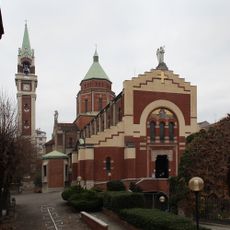
The Monumental Cemetery of Milan was designed by Carlo Maciachini and built from 1864 in an eclectic style combining Byzantine, Gothic and Romanesque elements. Its main entrance is the Famedio, a Neo-Medieval hall of marble and stone that holds the tomb of novelist Alessandro Manzoni. The grounds cover about 250,000 square metres and include a Jewish section and a non-Catholic section.
Opened in 1866, the cemetery was built to replace several smaller burial sites and create a centralized location for Milan's notable residents and important figures. The monuments and design evolved over time to reflect the changing artistic movements and values of Italian society.
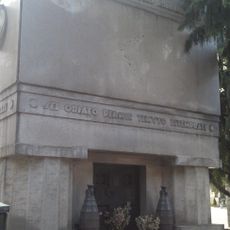
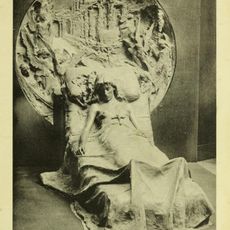
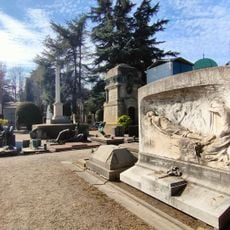
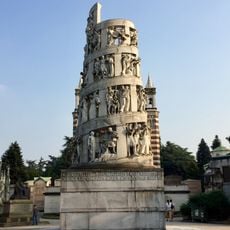
People come here to honor deceased artists and writers through the elaborate monuments that mark their resting places, reflecting how the city cherishes and remembers its cultural figures. The tombs serve as a way to keep notable lives present in the community's memory.
The cemetery is served by the Monumentale metro station on Line 5, and trams stop near the main entrance. The grounds cover about 250,000 square metres, so allow several hours to walk between the Famedio, the Jewish section and the crematorium. The main paths are paved and step-free, but some secondary routes have uneven surfaces.
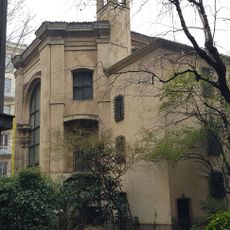
The crematorium temple was built in 1876 at the request of textile industrialist Alberto Keller; its first apparatus burned the body with gas-fed flames on the Polli-Clericetti system. Four wood-fired Gorini ovens installed in 1896 are still visible. The building, in Greek Revival style, also serves as a columbarium and stopped operating after Lambrate cemetery's newer ovens took over.
The community of curious travelers
AroundUs brings together thousands of curated places, local tips, and hidden gems, enriched daily by 93,344 contributors worldwide.