Domus Aurea, Ancient Roman palace in Monti, Rome, Italy
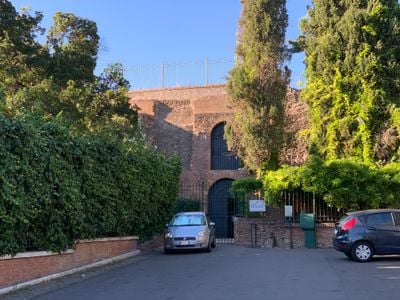
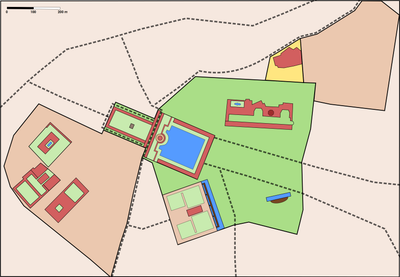
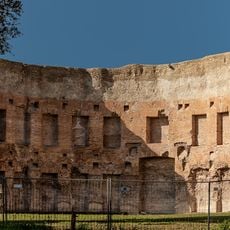
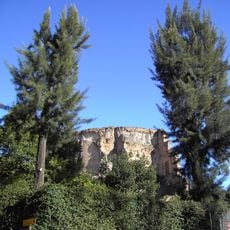
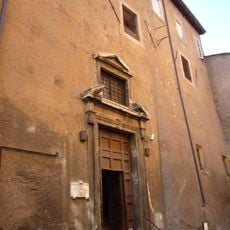
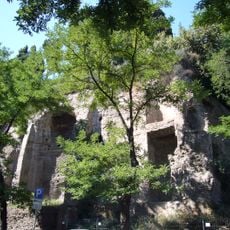
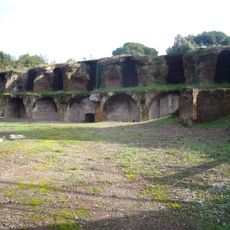
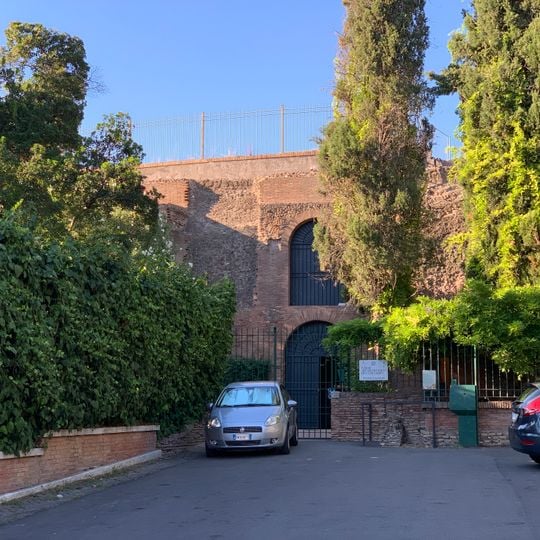
The Domus Aurea was Nero's palace complex on the Oppian Hill, built after the fire of 64 AD. Its surviving pavilion, about 300 by 190 metres, lies beneath the Baths of Trajan. Visitors see a long wall of thin red and brown Roman bricks with three round-headed upper arches fitted with dark metal grilles and three lower arches, one with a metal gate, one a dark doorway and one a slatted metal door.
Nero ordered the palace built from the year 64 after the great fire, with architects Severus and Celer completing the project in four years. Later Trajan had the complex filled in to build his bath above it, which preserved the rooms underground.
The name Domus Aurea, "Golden House", comes from the gold leaf and precious materials once used in its decoration. Renaissance artists including Raphael, Michelangelo, Ghirlandaio and Filippino Lippi had themselves lowered on ropes to study the frescoes; their signatures are scratched beside those of later visitors Casanova and the Marquis de Sade.
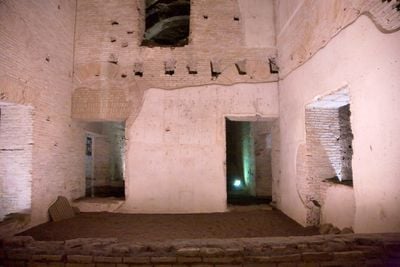
Visitors can explore select rooms of the archaeological complex only through guided tours, with protective helmets distributed at the entrance. The rooms lie underground and can be cool and damp, so warm clothing is advisable even in summer.
The octagonal dining hall had a rotating ceiling mechanism that turned continuously while servants dropped flower petals and sprayed perfumes on guests. The grotto was only rediscovered in the 15th century when a young man fell through a hole in the ground and found the painted walls.
The community of curious travelers
AroundUs brings together thousands of curated places, local tips, and hidden gems, enriched daily by 92,319 contributors worldwide.