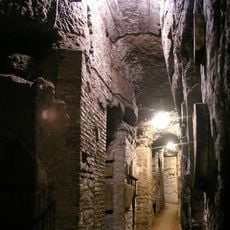
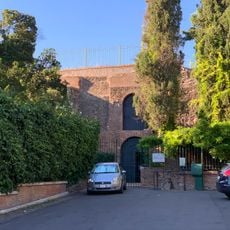
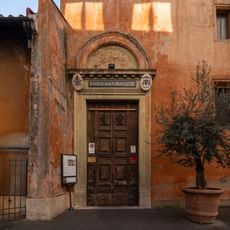
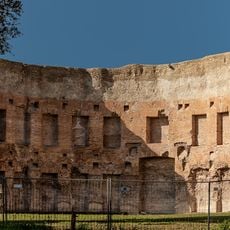
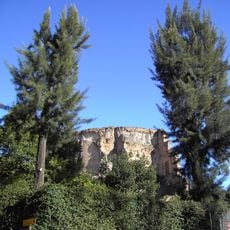
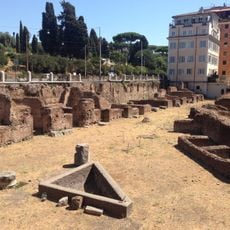
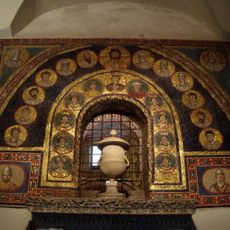
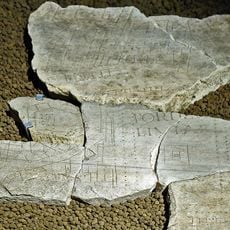
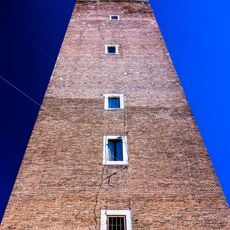
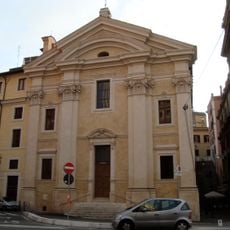
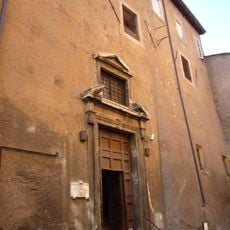
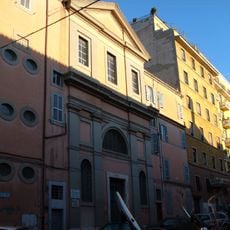
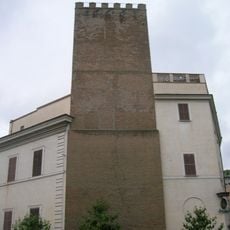
The Seven Halls, Ancient Roman cistern complex on Oppian Hill, Rome, Italy.
The Seven Halls is an underground storage complex on the Oppian Hill with nine parallel chambers, each stretching between 30 and 40 meters in length. The walls are lined with waterproof plaster to prevent moisture loss from the structure.
The structure was built around 100 AD to serve as a major water reservoir that supplied the Baths of Trajan through a branch of the aqueduct system from the Esquiline Hill. It represented a key component in the water distribution network of ancient Rome.
The name Sette Sale arose in the mid-18th century, when only seven chambers were recognised; the complex actually has nine compartments on each of its two levels. In the Middle Ages the northernmost chambers were used as catacombs, and the 1967 excavations uncovered more than a thousand skeletons there.
The entrance is on Via delle Terme di Traiano, at the edge of the park on the Oppian Hill. The reservoir sits on two levels: the lower cryptoporticus supports the upper tank, and the front wall with alternating rectangular and semicircular niches faces the street. Large openings in the upper niches provided ventilation.
The name came about in the eighteenth century when only seven chambers were identified, although nine parallel compartments actually exist. This naming stuck even though the full extent of the complex has long been known.
The community of curious travelers
AroundUs brings together thousands of curated places, local tips, and hidden gems, enriched daily by 92,841 contributors worldwide.