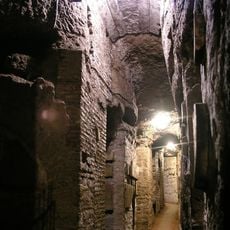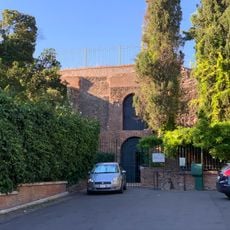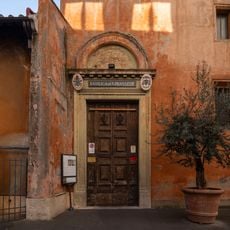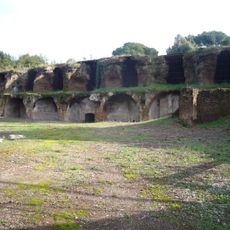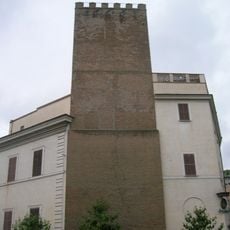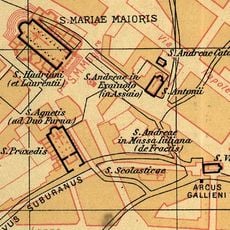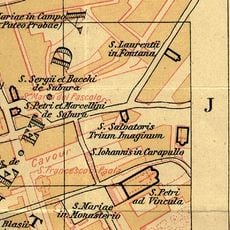
Porticus of Livia, Ancient Roman portico in Regio III Isis et Serapis, Rome, Italy.
The Porticus of Livia was a rectangular colonnaded complex on the Oppian Hill featuring parallel rows of columns flanking a central garden space. The structure provided Romans with a shaded place to walk and spend time, especially during warm weather.
Augustus built the structure after 15 BCE on the former estate of the wealthy citizen Vedius Pollio and later dedicated it to his wife Livia. The completion and dedication represented a significant building project during the early imperial period.
The structure contained a shrine to Concordia and displayed paintings on its walls, serving as a gathering place for Romans to socialize and walk.
Access to the complex was provided by two flights of stairs from Clivus Suburanus that led upward to the structure on the Oppian Hill. The stairs allowed visitors to reach the site conveniently from street level.
A famous grapevine grew in the courtyard and reportedly produced twelve amphorae of wine annually while also providing shade for visitors. This extraordinary plant was known throughout the city and added to the site's appeal.
The community of curious travelers
AroundUs brings together thousands of curated places, local tips, and hidden gems, enriched daily by 60,000 contributors worldwide.