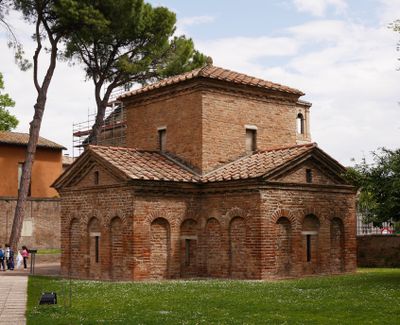
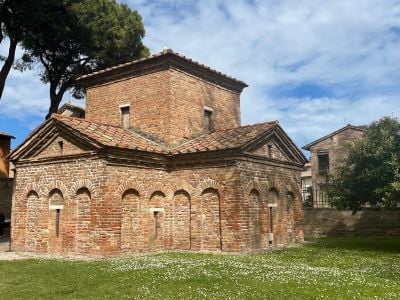
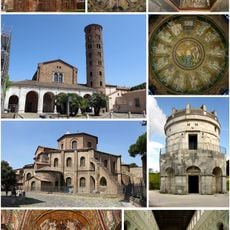
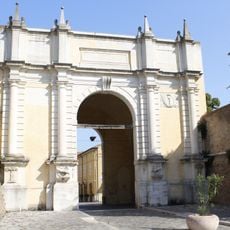
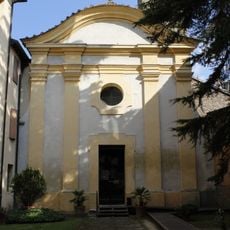
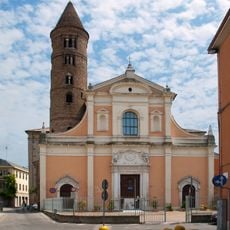
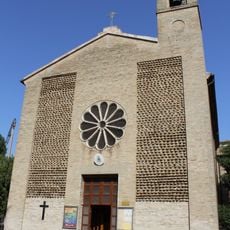
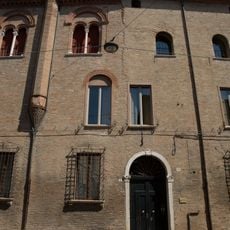
Mausoleum of Galla Placidia, Early Christian mausoleum in Ravenna, Italy.
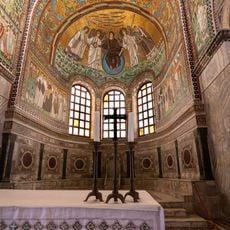
The Mausoleum of Galla Placidia is an early Christian tomb in Ravenna, Italy, dating from the 5th century. The small cruciform building contains mosaics depicting saints, religious scenes, and a star-studded vault.
The building was constructed between 425 and 450 as a chapel for the Church of Santa Croce. After the fall of the Western Roman Empire, the structure remained standing and later acquired its current name.
The name comes from Galla Placidia, mother of Valentinian III and regent of the Western Roman Empire, though she died in Rome in 450 and was not buried here. The building was long used as an oratory dedicated to Saint Lawrence and the saints Nazarius and Celsus. Look for the mosaic of Christ as the Good Shepherd above the entrance, and the two doves on a blue basin below the central niche.
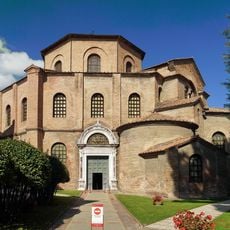
The building can be visited daily and is located near the Basilica of San Vitale in Ravenna. The interior is small, so only a few visitors can enter at the same time.
Three ancient sarcophagi stand inside, though none of them holds the remains of Galla Placidia. The blue coloring of the mosaics comes from a rare mineral that was imported from the eastern Mediterranean during late antiquity.
The community of curious travelers
AroundUs brings together thousands of curated places, local tips, and hidden gems, enriched daily by 94,066 contributors worldwide.