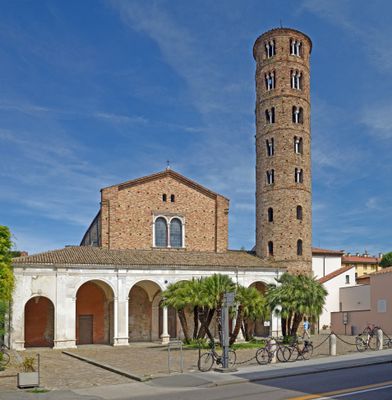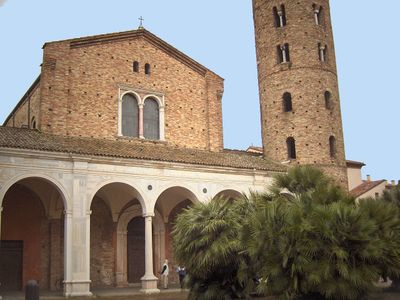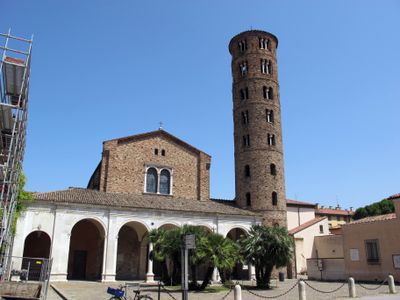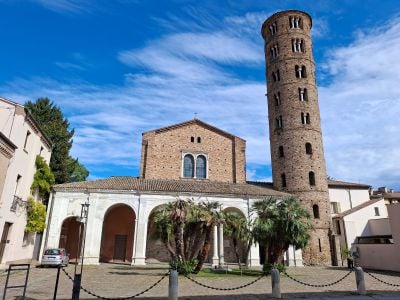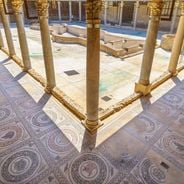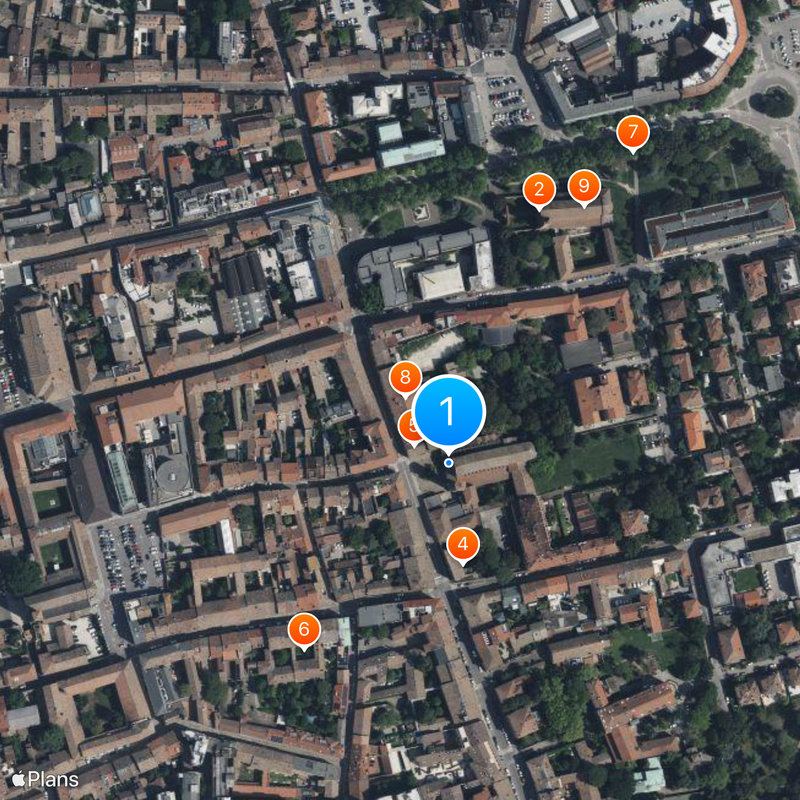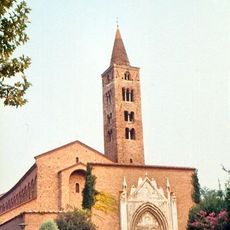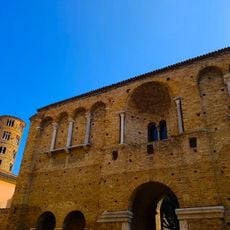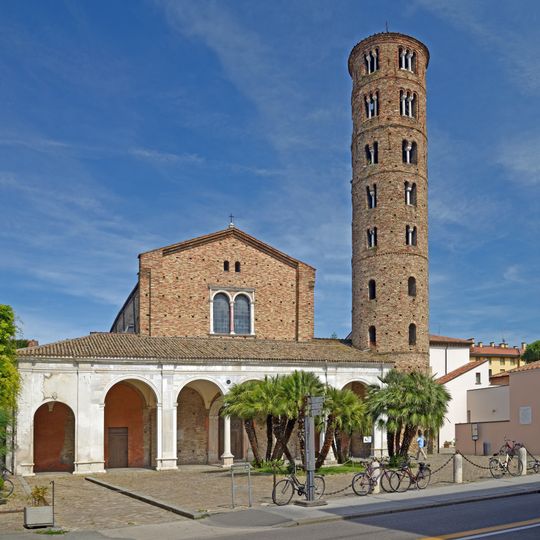
Basilica of Sant'Apollinare Nuovo, Early Christian basilica in Ravenna, Italy.
Sant'Apollinare Nuovo is an Early Christian basilica in Ravenna, Italy, with interior walls entirely covered in gold-ground mosaics from the 6th century. The three-aisled hall church features a freestanding bell tower and a rectangular floor plan, while the nave is bordered by two rows of marble columns with Corinthian capitals.
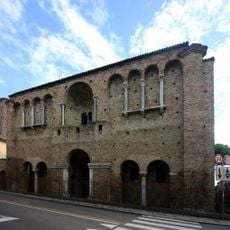
King Theodoric the Great commissioned the basilica in 505 as an Arian palace church next to his residence, originally dedicating it to the Savior. After the Byzantine conquest of Ravenna, the building was handed to the Catholic Church in 561, when all Arian references in the mosaics were removed and replaced with new representations.
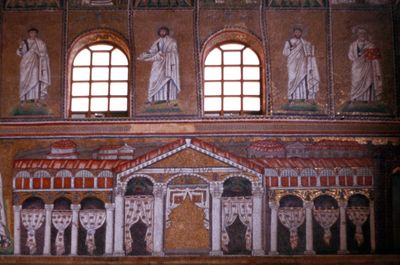
The iconographic program in the upper registers displays scenes from the life of Christ, spanning 26 panels that form a continuous reading sequence. Lower sections present long processions of martyrs and virgins walking toward the altar area, creating a steady visual rhythm that visitors can follow as they move through the space.
The interior of the basilica is well lit so the mosaics remain visible even on overcast days, and the level floor surface makes it easy to move through the space. Morning hours typically see fewer visitors, allowing for a calmer view of the wall surfaces.
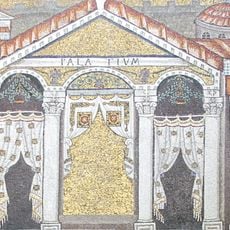
The mosaic work in the basilica includes a depiction of Theodoric's palace, where traces of later alterations remain visible as individual figures were removed from the image and replaced with curtains or architectural elements. Near a Last Judgment scene, there is also one of the earliest surviving depictions of a horned angel interpreted as a personification of evil.
The community of curious travelers
AroundUs brings together thousands of curated places, local tips, and hidden gems, enriched daily by 60,000 contributors worldwide.