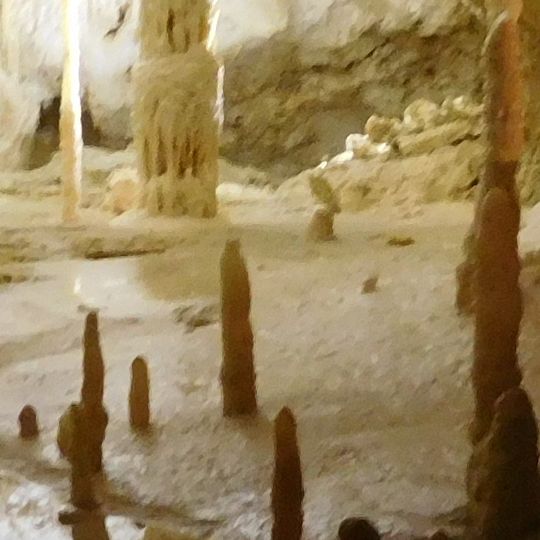
Frasassi Caves, Show cave system in Genga, Italy
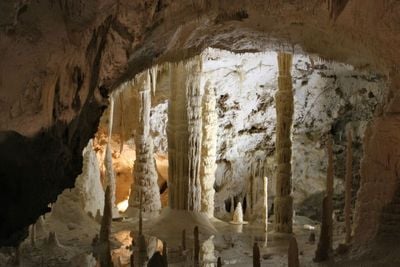
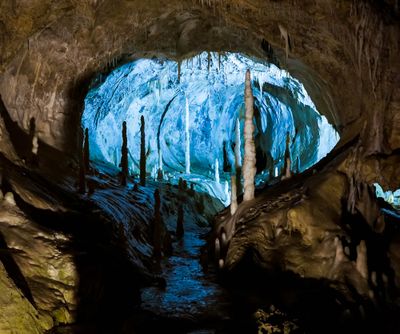
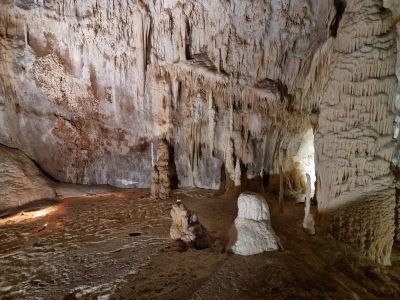
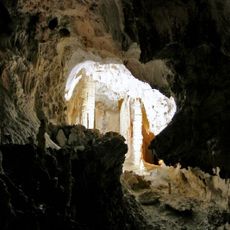
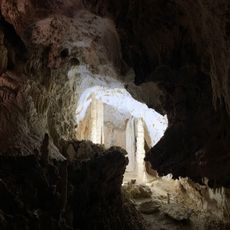
The Frasassi Caves are a show cave system in the municipality of Genga, in the Marche region of Italy, made up of large limestone chambers and connecting passages. Stalactites hang from the ceilings, stalagmites rise from the floors, and underground streams still run through parts of the system.
The Grotta del Fiume, the first cavity of the system, was found on 28 June 1948 by Mario Marchetti, co-founder of the Marchigiano Speleological Group of Ancona. On 25 September 1971 Rolando Silvestri, on an expedition led by Giancarlo Cappanera, found the entrance of the Grotta Grande del Vento, and on 8 December 1971 the two caves were linked. The Abisso Ancona opened to the public on 1 September 1974.
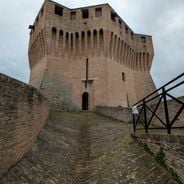
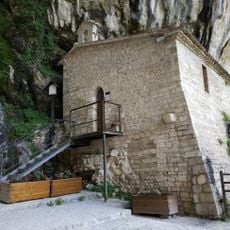
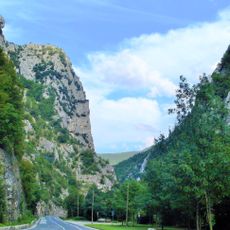
The name Frasassi comes from frassum, a medieval Latin word describing shattered or broken rock that refers to the outer gorge. Visitors walk through the rocky valley and past steep walls outside before entering through artificial tunnels that lead into the underground network.
The caves hold a constant 14 °C (57 °F) with humidity near 100%, so a warm layer helps at any season. The visitable route starts from the artificial access tunnel and passes through the Abisso Ancona, whose floor lies far below the entrance; the path is lit by cold white lamps, with blue light on wells and lakes. Sturdy shoes are useful on the damp, uneven floor.
Scientists used these caves to run chronobiology experiments in which volunteers lived underground for extended periods without natural light to study human biological rhythms. The constant environment and the absence of any external time cues made this an unusual setting for such research.
The community of curious travelers
AroundUs brings together thousands of curated places, local tips, and hidden gems, enriched daily by 92,654 contributors worldwide.