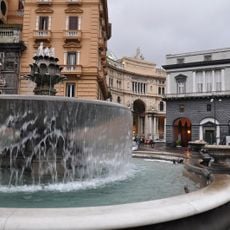
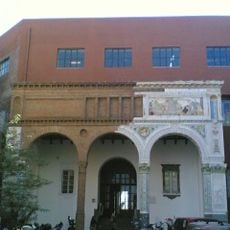
Palazzo Salerno, Neoclassical palace in Piazza del Plebiscito, Naples, Italy.
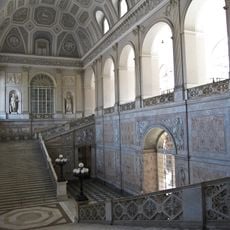
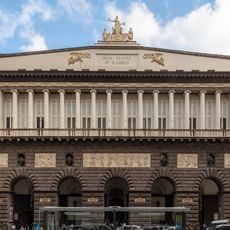
Palazzo Salerno is a neoclassical palace on Piazza del Plebiscito in Naples, marked by balanced proportions, evenly spaced columns, and clean architectural lines throughout. The facade and interior rooms display the geometric and ordered qualities that define late 18th-century neoclassical design.
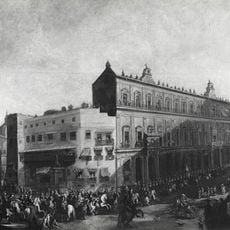
The palace was created by transforming the old convents of Santa Croce and Trinità di Palazzo near the Royal Palace, on the orders of King Ferdinand IV, to house royal cadets. Work began in 1775 under architect Francesco Sicuro. It later became the residence of minister John Acton and, until 1825, the seat of the Bourbon state ministers. From 1860 it served as the military command of the Neapolitan provinces.
The building shows how Naples moved away from Baroque excess toward cleaner, more ordered design. Walking around it, you notice how the architecture reflects a desire to return to ancient Greek and Roman ideals that shaped European taste in the 1700s.
The palazzo is near public transit connections and walkable from major Naples attractions, making it easy to include in a walking route. It now houses government offices, so you can view it from outside and photograph the facade without needing to go inside.
The overhanging wing of the building still carries the name Palazzo Croce, after the church of Santa Croce di Palazzo. The palace also once housed the "caffè turco", a well-known literary and artistic café of Naples. Since 2015 it has been the seat of the Italian Army's Comando Forze Operative Sud.
The community of curious travelers
AroundUs brings together thousands of curated places, local tips, and hidden gems, enriched daily by 93,915 contributors worldwide.