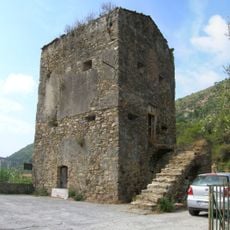
Albintimilium, Archaeological site in Ventimiglia, Italy
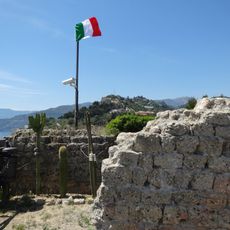
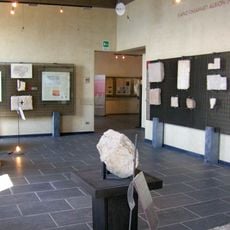
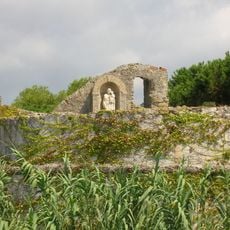
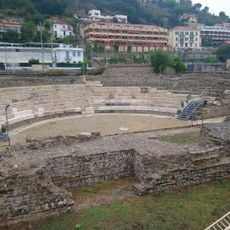
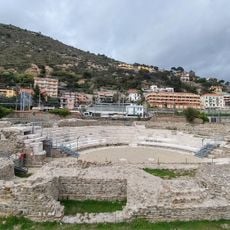
Albintimilium lies at Nervia, a frazione of Ventimiglia, in the natural channel between the Roja river and the Nervia stream. Excavations have exposed the Roman theater, the baths, stretches of the city walls, insulae to the north and a necropolis, plus an antiquarium holding finds from the digs. Two cardines and three decumani of the castrum grid have been identified, among them the Via Julia Augusta.
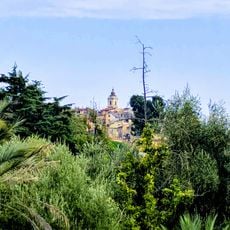
Albintimilium was the capital of the Intemelii Ligurians, became a Roman municipium in 89 BC, and was crossed by the Via Julia Augusta. It remained inhabited at least until the 7th century AD, when the population moved to the hill of Ventimiglia. The Roman ruins were later buried under a sand dune from the Nervia river mouth.
The name Albintimilium comes from the Ligurian Intemelii, the people whose centre this was before Rome. The Via Julia Augusta, the only carriage road of Roman times in western Liguria, ran through the town and appears on the Peutinger Table. Visitors can walk the decumanus maximus, 2.95 m wide with two well-preserved sidewalks, and see where a low wall was built over its paving in the early Middle Ages, ending its role as main street.
The site is easily reached from Ventimiglia's center and features information signs that guide visitors through the ruins. It is helpful to bring comfortable shoes and water, as the area is large and the sun is direct on the grounds.
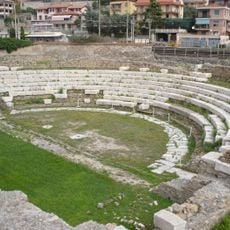
The theater was raised at the end of the 2nd and start of the 3rd century AD, and to build it the Romans demolished part of the western city wall and the south tower of the Porta di Provenza. Girolamo Rossi first exposed it in 1877; Pietro Barocelli's team uncovered about two thirds, and Nino Lamboglia finished the excavation.
The community of curious travelers
AroundUs brings together thousands of curated places, local tips, and hidden gems, enriched daily by 94,645 contributors worldwide.