Archaeological park of Posillipo, Archaeological park in Posillipo, Italy
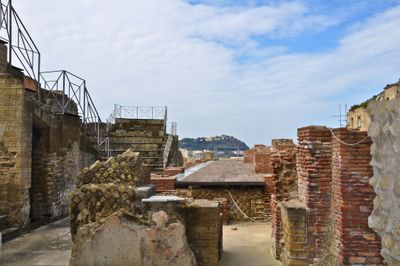
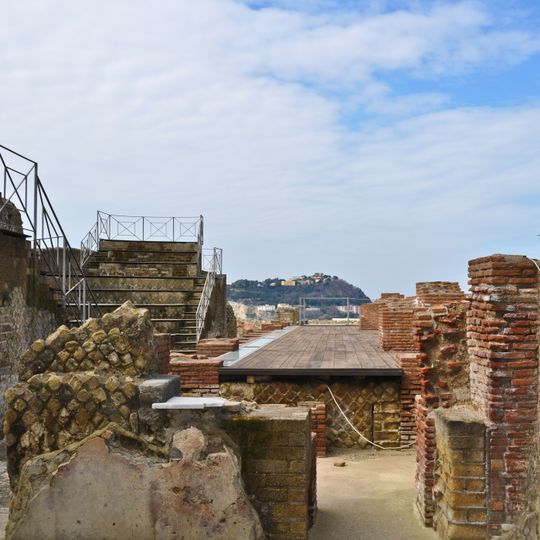
The archaeological park of Posillipo, or Pausilypon, holds the ruins of a Roman villa begun by Publio Vedio Pollione, with a 2,000-seat theatre, an odeon and a nymphaeum. Visitors enter through the Grotta di Seiano, a 770-metre tunnel cut into the tuff of the hill, whose side shafts open onto the Bay of Trentaremi. The surviving masonry mixes yellow-brown stone, red brick and patches of pale plaster; a stone-and-brick staircase with a metal railing climbs beside a plank-surfaced platform.
After the Battle of Actium in 31 BC, the Roman knight Publius Vedius Pollio chose this coastal spot between Gaiola and Trentaremi Bay for his final years and built a villa with a 2,000-seat theatre, an odeon, a nymphaeum and baths. When he died in 15 BC, he left the estate to Emperor Augustus, and it became an imperial residence used by his successors; Hadrian was the last to stay here.
The name Pausilypon means in Greek "place that makes sorrow cease", referring to the calm this stretch of coast offers. The remains of the Roman villa show how wealthy Romans used such locations for rest and social gatherings.
Guided tours must be booked in advance, with access to certain sections on set weekdays. The visit covers both surface ruins and passages through underground corridors, so sturdy footwear is recommended.
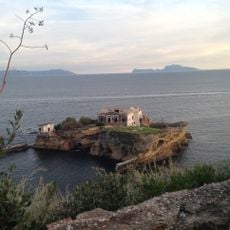
Part of the complex lies underwater, where Roman ruins at a depth of around 5 meters (16 feet) become visible through the clear Mediterranean water. These submerged structures show how the villa extended to the shoreline of that time.
The community of curious travelers
AroundUs brings together thousands of curated places, local tips, and hidden gems, enriched daily by 92,694 contributors worldwide.