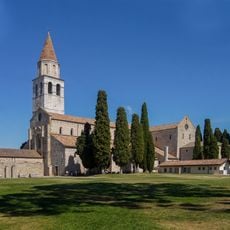
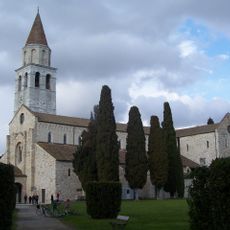
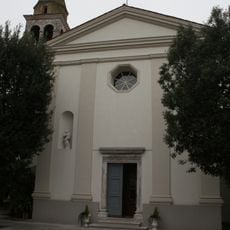
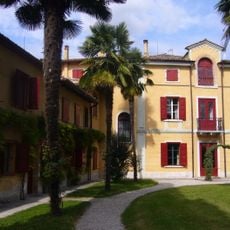
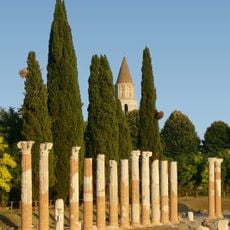
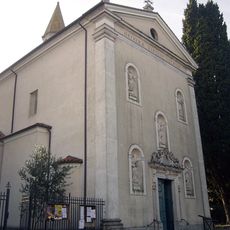
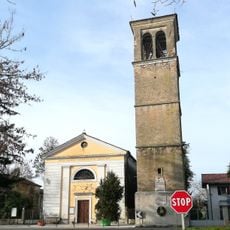
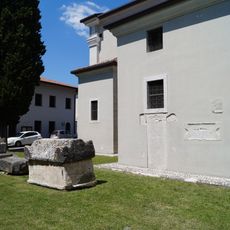
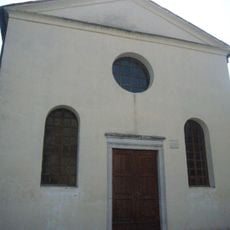
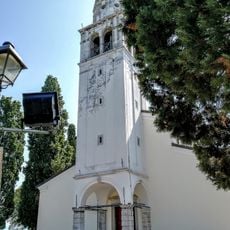
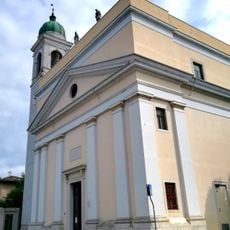
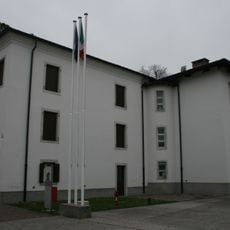
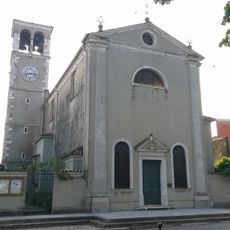
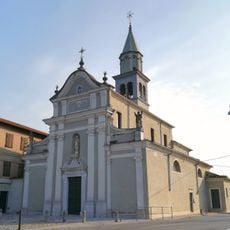
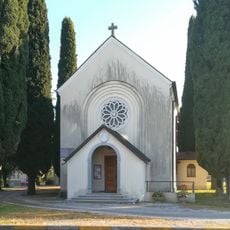
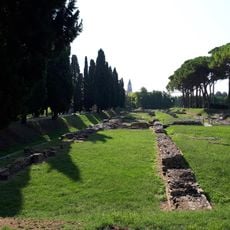
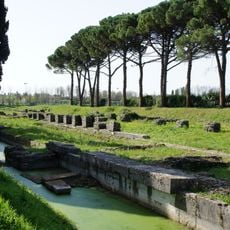
Archaeological Area and the Patriarchal Basilica of Aquileia, Archaeological site and basilica in Aquileia, Italy.
The Archaeological Area and Patriarchal Basilica of Aquileia is a large complex in northern Italy featuring Roman ruins including a forum, river port, markets, baths, and homes from ancient times. A medieval basilica rises above these remains with mosaics and artworks that show how the site developed from Roman city to Christian center.
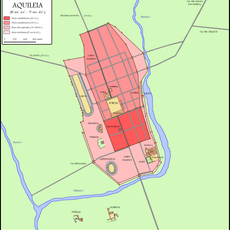
The city was founded in 181 BC and grew into one of Rome's major trading hubs through its location on trade routes and river port. Its destruction by Attila the Hun in 452 AD ended the Roman period, and a Christian basilica was later built over the ancient ruins.
The name Aquileia comes from the Latin Aquileia, and the basilica's 4th-century floor mosaics include a famous depiction of a peacock, a symbol of resurrection, in the nave. The mosaics also show a struggle between a cockerel and a tortoise, a scene whose meaning is still debated. Visitors can walk over these ancient floors, which were laid when the church was the seat of the patriarchs.
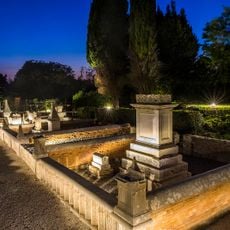
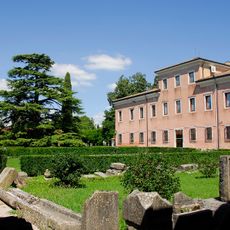
The complex spreads across a large area with pathways that visitors can walk to see both underground and above-ground remains. Access to the basilica and many sections is straightforward, making it possible for different groups of visitors to explore the site.
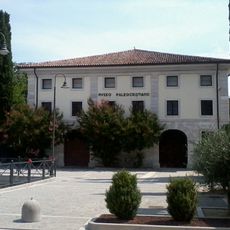
Centuries of stone-robbing left no Roman building standing above ground; excavations have uncovered one street and the northwest stretch of the city walls. The National Archaeological Museum holds over 2,000 inscriptions, statues, locally made glass and coins, and digging continues at what may have been Rome's largest city.
The community of curious travelers
AroundUs brings together thousands of curated places, local tips, and hidden gems, enriched daily by 92,863 contributors worldwide.