Albenga Baptistery, Early Christian baptistery in Albenga, Italy
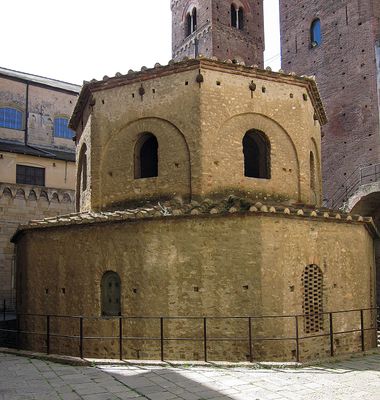
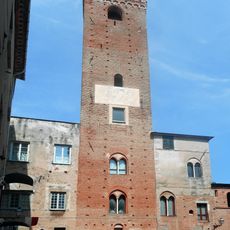
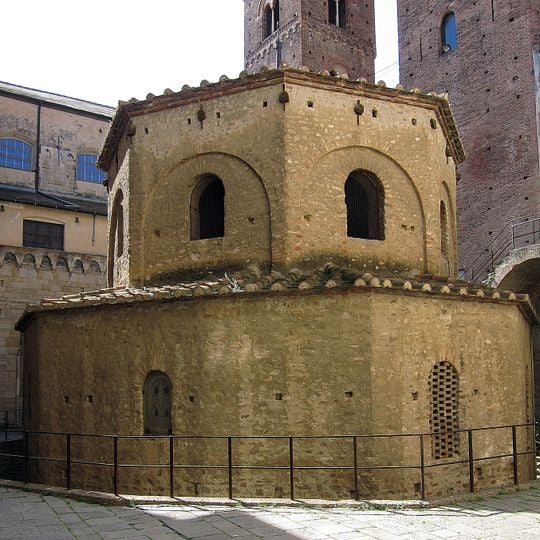
The Albenga Baptistery has a lower decagonal plan, with two corners cut so it fits the street, and an octagonal upper drum pierced by sixteen small arches. Inside, eight sides open into square and semicircular niches, and eight Corinthian granite columns, reused from a pagan temple, stand beneath the arches. The wooden dome roof dates from Alfredo d'Andrade's 20th-century restoration.
Inscriptions date the building to the 5th century, under a Flavio Costanzo, though some scholars place it between the later 5th and early 6th century. Its shape follows the Temple of the Sun in Diocletian's palace at Split, and its eight Corinthian granite columns came from a pagan temple. Repairs are recorded from 1491, under Bishop Leonardo Marchese.
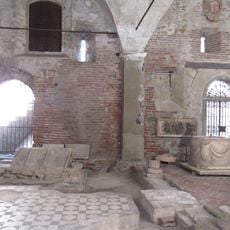
The interior features mosaics from the 6th century with religious symbols like the Chi-Rho emblem, twelve doves representing apostles, and two sheep in a pastoral scene. These works show how early Christians used images to teach spiritual ideas.
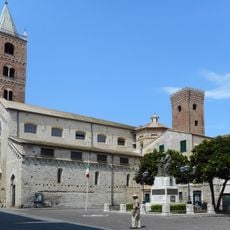
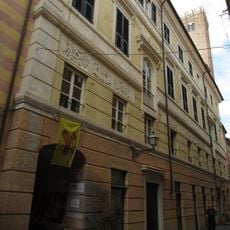
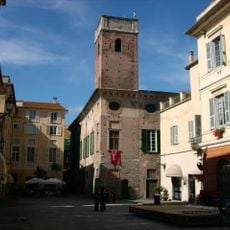
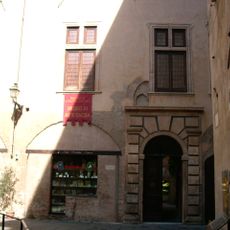
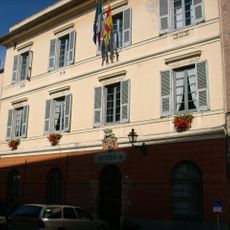
Access is via a staircase on the cathedral side, built in 2000, which descends to the level of the 5th-century city; the baptistery then resumed hosting religious celebrations. It stands in a small square off via Nino Lamboglia, between the old town hall and San Michele Arcangelo Cathedral.
The structure contains two Lombard burial monuments from a later period, showing how the site continued to be used after its original function changed. The mosaics include three concentric circles symbolizing the Trinity, representing rare surviving examples of this theological artistic language.
The community of curious travelers
AroundUs brings together thousands of curated places, local tips, and hidden gems, enriched daily by 94,387 contributors worldwide.