Roman thermae of Albenga, Roman baths archaeological site in Albenga, Italy.
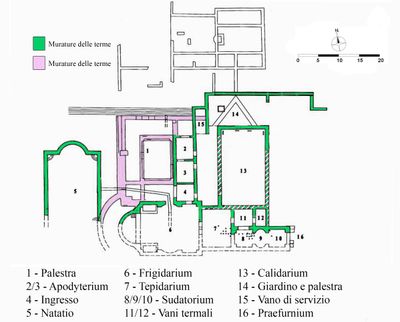
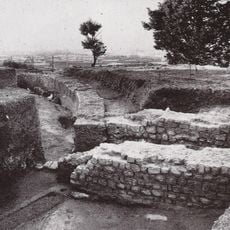
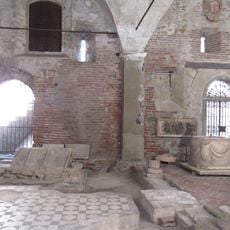
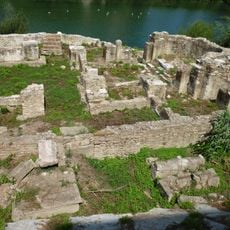
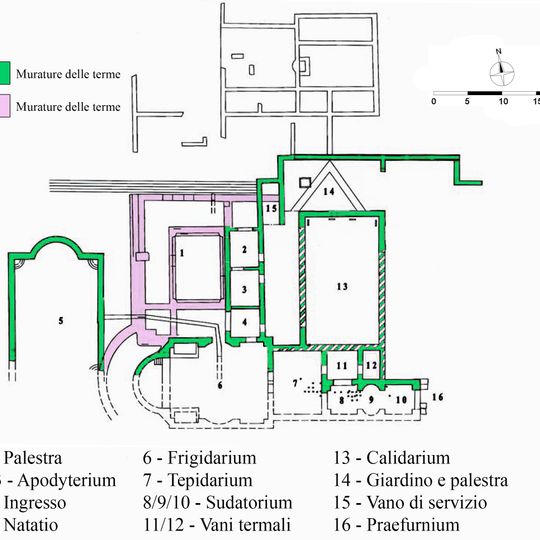
The Roman thermae of Albenga lie in the bed of the Centa river, about 6 m below the modern street level. Excavated in 2001, the complex covers roughly 2,000 sq m along a 60 m east-west axis parallel to the river. It comprises an open-air natatio 12 m wide, waterproofed with cocciopesto and with a semicircular apse and quarter-circle corner steps, and bathing rooms arranged from cold to heated. A 30 m wide, four-step entrance stairway led to a porticoed courtyard.
The complex was built during the 2nd century AD as a public facility for the Roman city, reflecting the engineering knowledge available to builders at that time. The structure shows how Romans solved practical challenges like heating large amounts of water and distributing it throughout connected rooms.
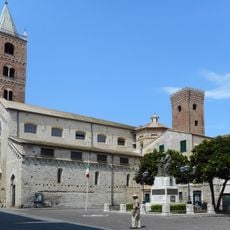
The baths were a public balneum, a place for hygiene but also for rest and leisure, as the Latin term recorded in the sources states. Bathers entered from the north through a 30 m wide staircase with four steps, then crossed an open yard of packed mortar used for physical exercise before bathing, the Roman custom. A marble inscription, later lost and reused in the walls of nearby San Calocero, named the proconsul M. Valerio Bradua Maurico and Q. Virio Egnazio as builders.
The site is accessible to visitors who can walk through the different bath chambers and understand the original layout. It helps to observe the underground passages and brick structures carefully to appreciate how the heating system functioned.
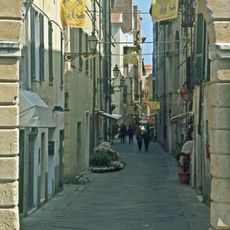
The bath floor lies 6 metres below the present street level of Albenga, on the bed of the Centa, which shows how much ground has risen since Roman times. A wooden pile cut around AD 70, found under the paving, supports the dating of the complex.
The community of curious travelers
AroundUs brings together thousands of curated places, local tips, and hidden gems, enriched daily by 94,046 contributors worldwide.