Castle of Modica, Medieval fortress in Modica, Italy.
The Castle of Modica sits on a rocky outcrop in the town's historic core and features rooms hewn directly from the bedrock. The structure contains administrative chambers on upper levels and prison cells below, along with the chapel, creating a layered fortress adapted to the slope.
The castle appears in the Statuta Castrorum Siciliae, the two lists of royal Sicilian castles drawn up under Charles I of Anjou in 1268 and 1272, and is named in the second of them; a papal bull issued at Anagni on 21 August 1255 also mentions it. From 1361 it housed the Gran Corte, the court of justice, joined in 1392 by the Court of First and Second Appeals. Count Matteo Chiaramonte received King Frederick IV of Aragon here in 1366, and Count Bernardo Cabrera hosted King Martin I of Sicily in 1401.
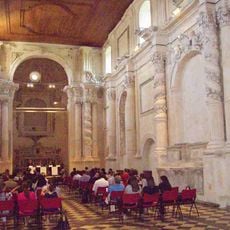
The church of San Cataldo was the private chapel of the count and the governor, not a public church. Its bells, hung in three bell niches now walled up on the outside, marked the hours for the town and the moments of life inside the castle. The chapel stands in the inner courtyard, where the church of the Madonna del Medagliere was built in 1930 on the ruins of San Leonardo.
Access to different sections requires navigating uneven stone pathways and climbing stairs between levels, so sturdy footwear is essential. Plan extra time to move slowly through the spaces and adjust to the changing elevations as you explore.
Two deep shafts approximately 7 meters (23 feet) deep with iron grating were built specifically to hold the most dangerous prisoners and still exist today. These underground spaces offer a rare view into how medieval rulers secured their most threatening captives.
The community of curious travelers
AroundUs brings together thousands of curated places, local tips, and hidden gems, enriched daily by 94,350 contributors worldwide.