Castle of Trani, Medieval fortress in Trani, Italy
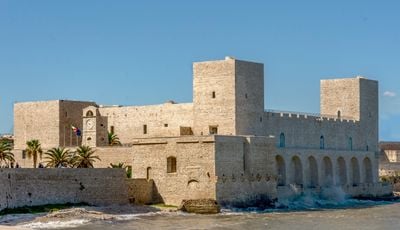
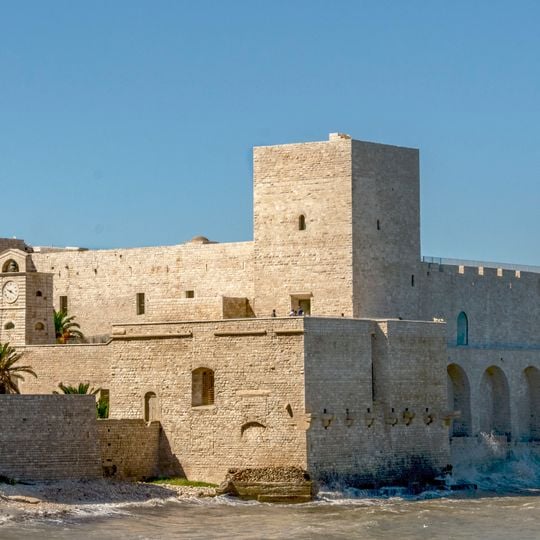
The Castle of Trani is a coastal fortress of pale, rough-hewn stone blocks standing at the water's edge. Its tallest feature is a plain square tower with a single small arched opening near the top; to the left, lower walls carry a small clock tower with a clock face and a rounded arch. The main facade facing the water has a projecting lower section with several arched openings and a row of stone corbels beneath its top edge.
Emperor Frederick II ordered this defensive structure built in 1233 to protect the southern Italian coast. The fortress was part of a wider network of strongholds created during his reign to maintain control over the region.
The castle displays weapons and objects from different periods, showing how fighting methods changed over time. You can sense how important this fortress was for controlling the region and its trade.
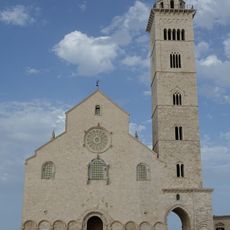
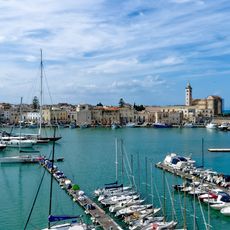
The castle opened to the public on 5 June 1998 after restoration begun in 1979. It stands on a rocky bank in the middle of the bay, facing the cathedral across the water, so the seaward side is reached by a quay rather than the land entrance. The three land sides are enclosed by an outer wall and a moat.
On the summit of one sea tower Frederick II had Pietro Tiepolo, son of the Venetian doge Jacopo Tiepolo, hanged; Pietro had been captured as podestà of Milan at the Battle of Cortenuova in 1237. The castle also held Siffridina, Countess of Caserta, imprisoned on the emperor's orders and kept on bread and water until her death in March 1279.
The community of curious travelers
AroundUs brings together thousands of curated places, local tips, and hidden gems, enriched daily by 94,575 contributors worldwide.