San Benedetto Vecchio's church, Romanesque church in Padua, Italy
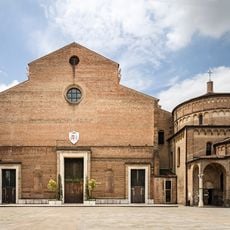
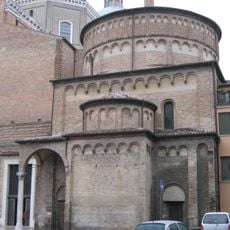
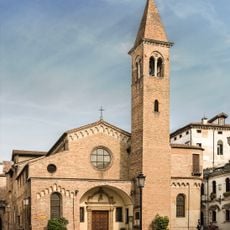
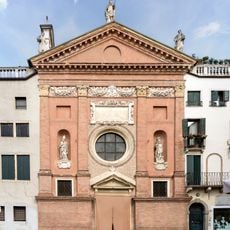
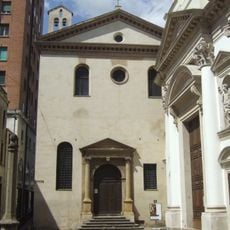
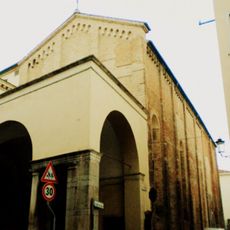
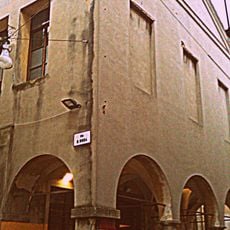
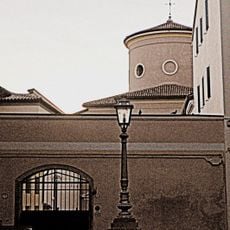
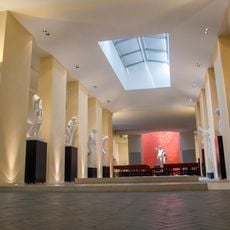
San Benedetto Vecchio faces the Riviera San Benedetto on the Bacchiglione in Padua. Its east-facing facade dates from the 17th century, built on the wall that held the apse until the 16th century, with two orders of pilasters, a single tympanum portal and a relief of God the Father. The interior has three naves of terracotta-coloured round arches on pillars, a wooden-truss central nave and cross-vaulted aisles.
The church was founded as a Benedictine monastery and takes its name from Saint Benedict of Nursia, the founder of the Benedictine order. Over the centuries, it retained its Romanesque structure even as Padua's urban landscape transformed around it.
This church serves as a spiritual center for the local community, where regular Roman Rite services continue today. The building itself reflects the religious importance it has held for Padua's residents throughout the centuries.
The church is centrally located in Padua and easily accessible on foot; visitors should note that active services continue to take place. Comfortable shoes are recommended, as the floor consists of old stone and may be uneven in places.
The church preserves the tomb of Giustiniana Wynne, the Anglo-Venetian writer known as the "English Hermit", who died in Padua in 1791. Allied bombs on 11 March 1944 destroyed the cycle of Apocalypse stories painted by Giusto de' Menabuoi, so the medieval frescoes once here are lost rather than preserved.
The community of curious travelers
AroundUs brings together thousands of curated places, local tips, and hidden gems, enriched daily by 92,619 contributors worldwide.