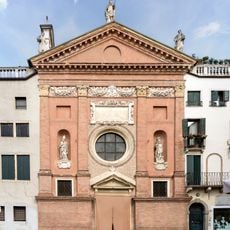
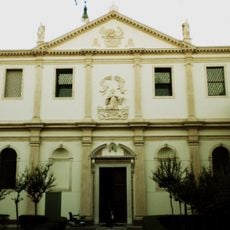
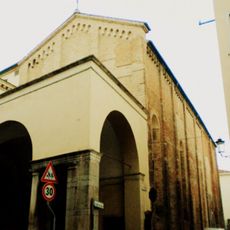
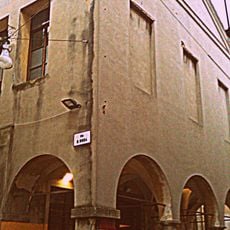
Chiesa di San Pietro Apostolo, Romanesque church in Padua, Italy
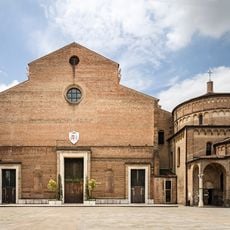
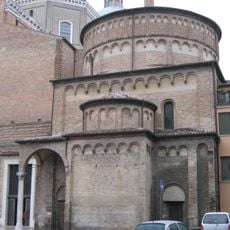
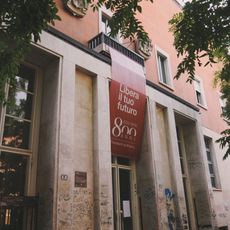
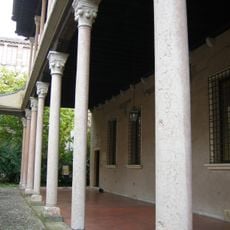
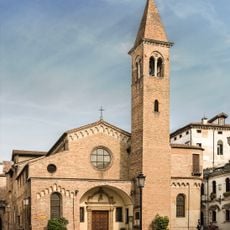
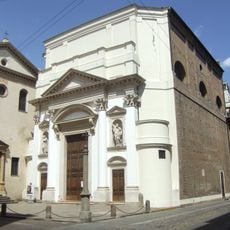
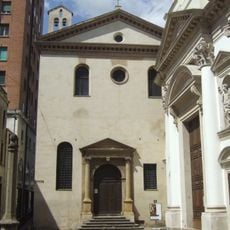
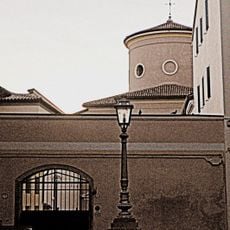
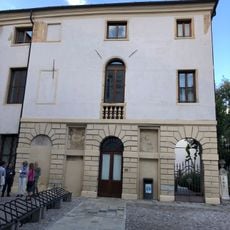
The Chiesa di San Pietro Apostolo stands on Via San Pietro with a Renaissance facade raised on four slender arches forming a portico, framed by pilasters with Lombard-style capitals and a 15th-century bifora window. Its bell tower, perhaps the oldest in Padua, has a base dating to the 10th century and a late-16th-century belfry with a copper roof. Inside, a single nave covered by 15th-century umbrella vaults holds four early-19th-century Neoclassical altars.
The church began as a chapel of a late-antique palatine complex, perhaps already in the 4th century. The abbey was destroyed by Hungarian raids in 899-900; after rebuilding before 1026, Bishop Orso installed Benedictine nuns as canonesses. Abbess Angela degli Alvarotti restored it in 1480 with a Renaissance facade, and in 1765 part of the right nave was occupied by a replica of the Holy House of Loreto.
The church was the seat of Benedictine canonesses, a status tied to a 9th-century royal privilege confirmed by Louis II on 22 April 866. Their monastery was suppressed under Napoleonic legislation in 1809, but the nuns stayed on for some decades and received the body of Blessed Eustochio from San Prosdocimo. Her relics are still kept here and draw pilgrims.
The church is located on Via San Pietro and is easily accessible within Padua. Check opening hours before visiting and wear appropriate clothing to show respect for the sacred space.
In 1745, the Benedictine nuns won such a large lottery prize from the Venetian Republic that they needed a cart to collect their winnings. This unexpected fortune provided the community with funds for the convent's upkeep.
The community of curious travelers
AroundUs brings together thousands of curated places, local tips, and hidden gems, enriched daily by 92,838 contributors worldwide.