Chiesa di Santa Maria in Cellis, Renaissance religious edifice in Carsoli, Italy.
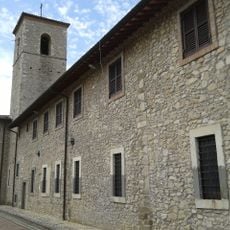
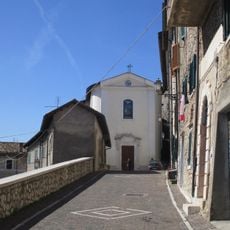
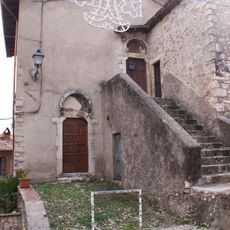
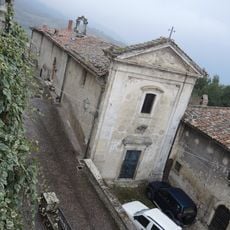
The Chiesa di Santa Maria in Cellis is a Renaissance building with a horizontal facade divided by a cornice. The lower section features a portal and two windows, while the upper portion displays a Renaissance-style window.
The church likely dates to the 10th century, built by the Camaldolese monks of San Romualdo. Around the year 1000 Count Rainaldo of the Marsi restored it and added a monastery. From 1048 to 1057 it served as cathedral of the new diocese of Carsoli, created by Pope Benedict IX under pressure from the counts of Marsi, who imposed Azzo, also called Attone, as bishop alongside Pandolfo; the Roman synod of 1057 ended the schism. In 1059 Count Siginolfo Berardi donated the monastery to Montecassino.
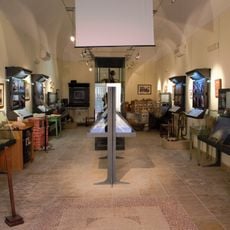
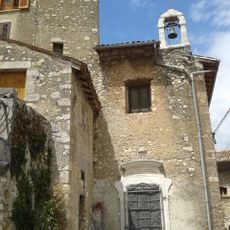
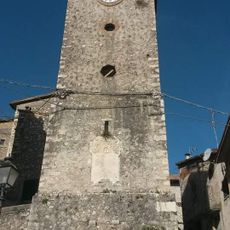
The name "in Cellis" refers to the monks' cells of the Camaldolese community of San Romualdo, who built the church in the 10th century out of devotion to the Virgin Mary. A niche on the bell tower holds a figure of a king whom local tradition identifies as Charles I of Anjou. The 1132 wooden doors carved with New Testament scenes are now kept at the Museo d'Arte Sacra della Marsica in Celano.
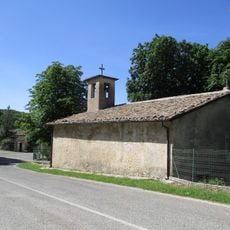
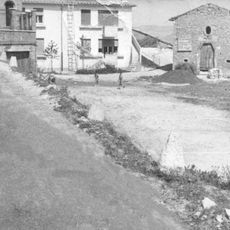
The church stands beside the cemetery of Carsoli, in the province of L'Aquila, and is reached from the town along the road serving the burial ground. The 1132 wooden doors carved with New Testament scenes are no longer in place: they are kept at the Museo d'Arte Sacra della Marsica in Celano.
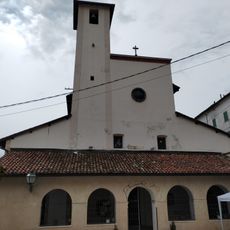
The bell tower stands out for incorporating large carved blocks from Roman funeral monuments. This practice reveals how communities reused materials from earlier structures when constructing new buildings.
The community of curious travelers
AroundUs brings together thousands of curated places, local tips, and hidden gems, enriched daily by 94,610 contributors worldwide.