Santa Croce in Fossabanda, Medieval convent and church in Pisa, Italy
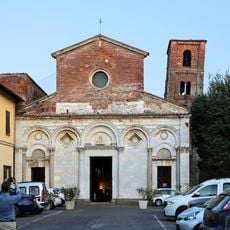
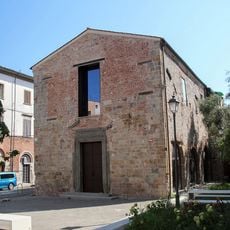
Santa Croce in Fossabanda is a church and former convent on Piazza Santa Croce, in Pisa's north-eastern Piagge district. The facade has a portico; inside is a single hall ending in a deep presbytery that holds the wooden choir, begun in 1715 and finished in 1806. The one side chapel, near the entrance, keeps Alvaro Pirez d'Evora's Madonna and Child with eight music-making angels, painted around 1430.
A Dominican convent existed here by 1233, when Pisa's Statutes mention it; the present church and convent were built for Dominican nuns from 1322, the work attributed to Bartolomeo del Cantone. In 1426 the abandoned complex was bought by Florentine patrician Pietro Neretti and given to the Observant Franciscans, who rebuilt it in its current form. Suppressed in 1810 under Napoleon and again in 1866, it was expropriated and sold to the Pisa municipality on 16 June 1875 for 19,483.88 lire.
The church displays a painting of the enthroned Madonna with musician angels, created by Portuguese artist Alvaro Pirez di Evora in the 15th century. This work reflects artistic connections between southern European regions during that period.
The complex is located at Piazza Santa Croce in Fossabanda and is easily accessible from Pisa's main streets. Multiple restaurants and accommodations are found in the immediate surroundings.
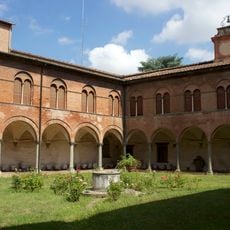
The toponym Fossabanda is documented from the 11th century and referred to a drainage ditch in marshy land bordering the property of a certain Bando, named in two deeds of sale dated 1034 and 1111. The cloister of the former convent now serves as a student residence of the Scuola Superiore Sant'Anna.
The community of curious travelers
AroundUs brings together thousands of curated places, local tips, and hidden gems, enriched daily by 93,947 contributors worldwide.