Convent of Santa Maria La Nova, Religious complex in central Naples, Italy
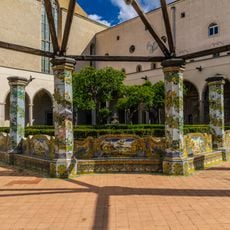
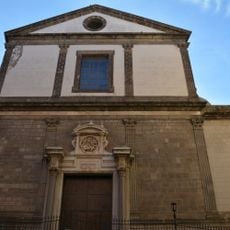
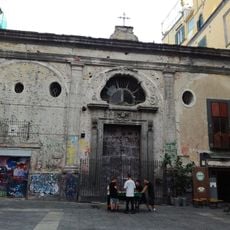
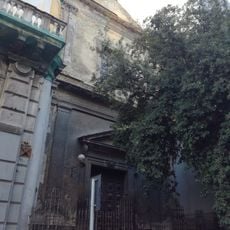
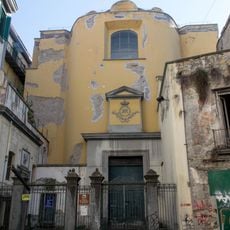
The Convent of Santa Maria La Nova is a former Franciscan convent entered from the left side of the church, on the site of the former chapel of Sant'Onofrio. It has two cloisters: the smaller San Giacomo cloister, built at the end of the 16th century by Giovanni Cola di Franco, is rectangular with Ionic columns on a low wall, a marble well in the courtyard and a late-17th-century fresco cycle on San Giacomo della Marca. The larger San Francesco cloister is square, Tuscan in style, with nine arches per side on white marble columns with granite capitals.
The Franciscan monastery was founded in 1279 after Charles I of Anjou granted permission to build a new church replacing the demolished Santa Maria ad Palatium. The convent developed over centuries into a significant religious and artistic center in Naples.
The building houses a museum of contemporary religious art in what were once monk cells, displaying works by artists including Riccardo Dalisi. The collection brings modern artistic expression into dialogue with the convent's spiritual spaces.
The complex is located near Naples' main post office and is easily accessible by public transport and on foot. Plan at least an hour to explore the cloisters, refectory, church, and museum spaces at your own pace.
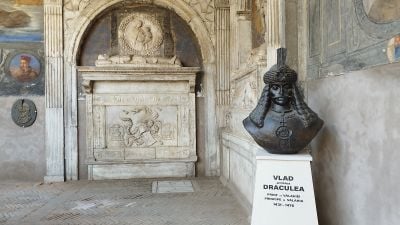
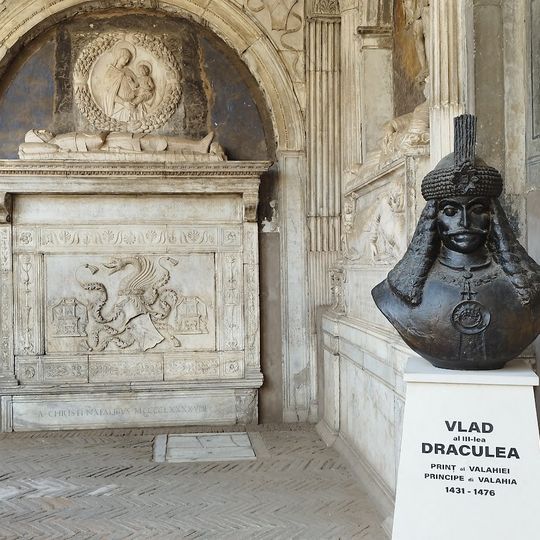
In the smaller cloister stands the 1499 tomb of Matteo Ferrillo, carved by Jacopo della Pila; some scholars have identified it as the burial of Vlad III the Impaler. Nearby are the tomb of Costantino Castriota Scanderberg (1500) and a marble wellhead in the central courtyard.
The community of curious travelers
AroundUs brings together thousands of curated places, local tips, and hidden gems, enriched daily by 93,107 contributors worldwide.