Santa Maria Immacolata a Grottarossa, Catholic church in Grottarossa district, Rome, Italy.
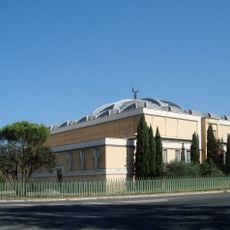
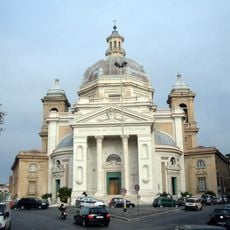
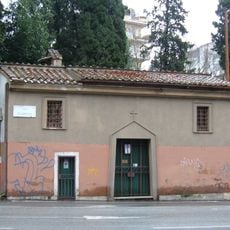
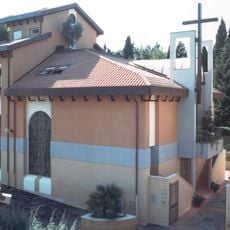
Santa Maria Immacolata a Grottarossa is a church in the Grottarossa district built along Via Flaminia with clean lines and simple geometric forms. The structure displays a straightforward, functional design typical of early modern religious architecture.
The church was built in 1935 by Ettore Molinario to meet the spiritual needs of workers at the agricultural estate that gave rise to the Grottarossa hamlet. It stands along the Via Flaminia at Saxa Rubra, site of the 312 battle between Constantine I and Maxentius. The parish was established on 4 June 1937, and on 2 November 1986 Pope John Paul II visited and crowned a new effigy of the Immaculate Madonna.
The church is a titular church, assigned to Cardinal Wilton Gregory since 2020; his predecessor was Henryk Gulbinowicz (1985–2020). Pope John Paul II established the title on 25 May 1985 and visited on 2 November 1986, when he crowned a new effigy of the Immaculate Madonna. The parish itself was founded on 4 June 1937.
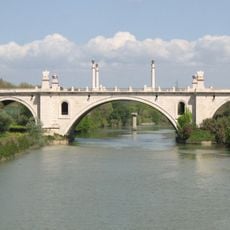
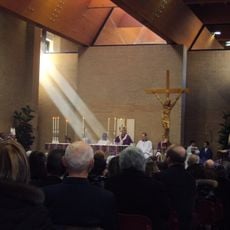
The church stands at Via Flaminia 994 in the Grottarossa zone, north of the Milvian Bridge, on the stretch of the ancient road known as Saxa Rubra. It is a parish church, so visits are best arranged around Mass times rather than fixed opening hours. The single nave and cross plan make orientation inside immediate.
Since 1985 the church has been a titular church, assigned to cardinal-priests; its first holder was Henryk Gulbinowicz (1985–2020), and since 2020 the title belongs to Wilton Gregory. The dedication is recorded in Latin as Titulus Immaculatae Conceptionis Mariae ad Saxa Rubra.
The community of curious travelers
AroundUs brings together thousands of curated places, local tips, and hidden gems, enriched daily by 94,447 contributors worldwide.