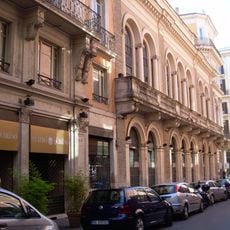
Galleria Sciarra, Decorated covered passage in central Rome, Italy
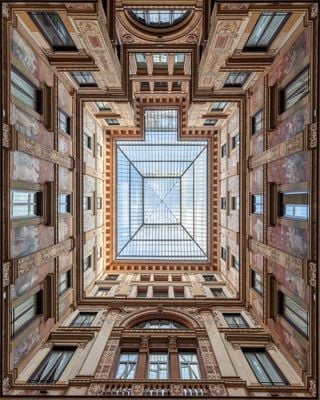
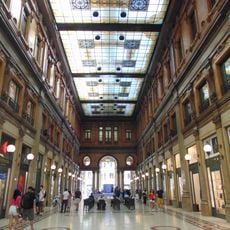
Galleria Sciarra is a rectangular pedestrian courtyard in the Trevi district, built 1885–1888 as the rear court of Palazzo Sciarra Colonna di Carbognano. It is roofed by an iron and glass vault with cast-iron columns at the entrances, and its walls rise in stepped tiers of dark-framed windows between painted panels. Giuseppe Cellini painted the frescoes in encaustic in 1888.
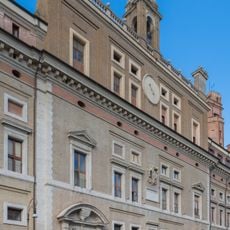
The gallery was built between 1885 and 1888 as the outer courtyard of Palazzo Sciarra Colonna di Carbognano, a palace begun in the late 16th century, on the site of the ancient Porticus Vipsania. Prince Maffeo Barberini Colonna di Sciarra, VIII prince of Carbognano, commissioned it to link his properties; the architect was Giulio De Angelis. A late-1970s safety restoration rebuilt the interior in reinforced concrete but kept the paintings and ironwork.
The walls display frescoes showing female figures that represent virtues like modesty, strength, patience, and wisdom. These images tell you about the values people admired during the late 1800s.
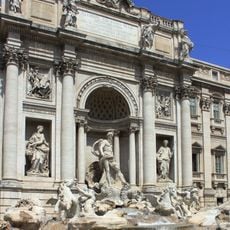
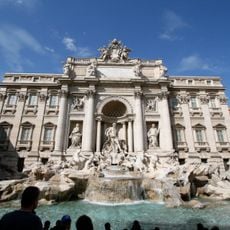
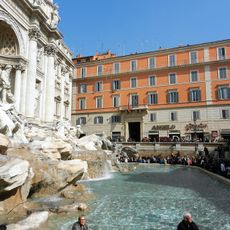
The gallery is a private courtyard open to the public during office hours, with entrances on Via Marco Minghetti and Piazza dell'Oratorio, a short walk from the Trevi Fountain. Look up from the centre of the courtyard to see the iron-and-glass roof and the painted tiers above.
The initials CSS on the entrance shields stand for Carolina Colonna Sciarra, mother of Prince Maffeo Barberini Colonna di Sciarra, to whom the twelve painted virtues pay homage. In the scene of the gallant conversation, the man talking with the noblewoman is said by legend to be Gabriele D'Annunzio, who later directed the Cronaca Bizantina housed here.
The community of curious travelers
AroundUs brings together thousands of curated places, local tips, and hidden gems, enriched daily by 94,153 contributors worldwide.