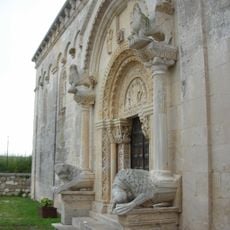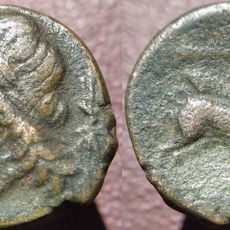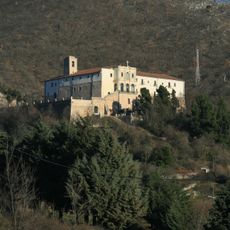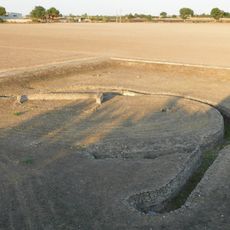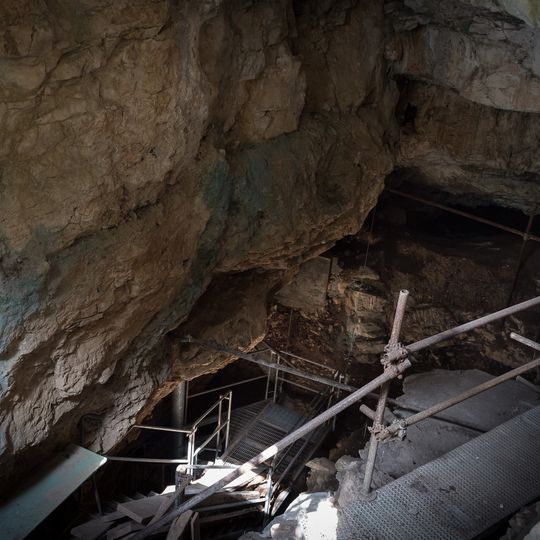
Paglicci Cave, Paleolithic cave in Rignano Garganico, Italy.
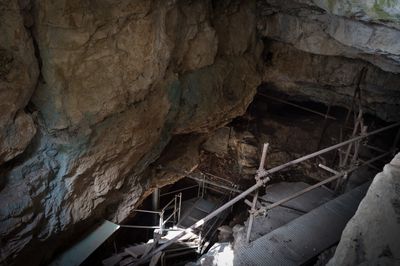
Paglicci Cave opens in a limestone wall above a valley near Rignano Garganico. Its deposit spans 24 layers from 39,000 to 13,300 years BP, and the inner chambers hold Palaeolithic wall paintings of horses and handprints, a rare example in Italy.
Michele Bramante, owner of the farmland, first reported the site, and excavations began in the 1960s under the University of Siena, directed by Arturo Palma di Cesnola from 1971 to 2001. The 24 stratigraphic levels span 39,000 to 13,300 BP, from the final Aurignacian through all Gravettian and Epigravettian phases. Treasure hunters seeking the hoard of the brigand Gabriele Galardi, called "Jalarde", used explosives and destroyed part of the deposit.
The cave's inner chambers hold rare Paleolithic wall paintings: handprints and drawings of horses, among the few such examples in Italy. Engraved on bone are goats, cows, a serpent, a nest with eggs and a hunting scene. The name Paglicci comes from the locality in Rignano Garganico where the cave opens.
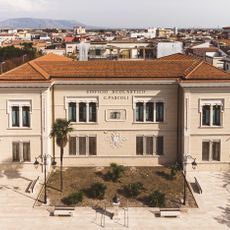
The cave can only be visited with a guide due to the narrow passages and archaeological sensitivity of the site. A museum located in the town of Rignano Garganico displays original artifacts and detailed explanations about what was discovered here.
Among the finds is a pestle about 32,000 years old carrying starch granules, evidence of wild oat processing at the site, dated by some researchers to around 30,600 BC. The cave also yielded remains of the oldest domestic dog known in Italy, between 20,000 and 14,000 years BP.
The community of curious travelers
AroundUs brings together thousands of curated places, local tips, and hidden gems, enriched daily by 92,765 contributors worldwide.