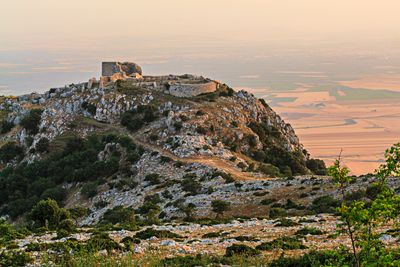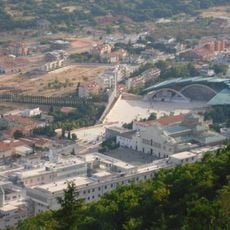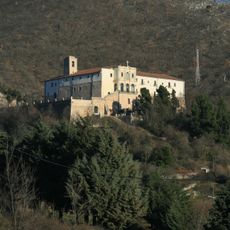
Castelpagano, Medieval castle ruins near Apricena, Italy
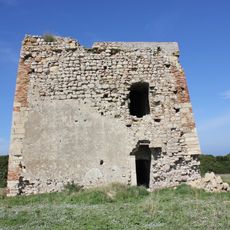
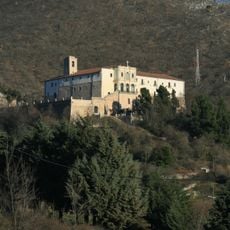
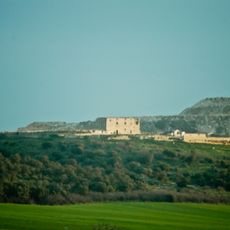
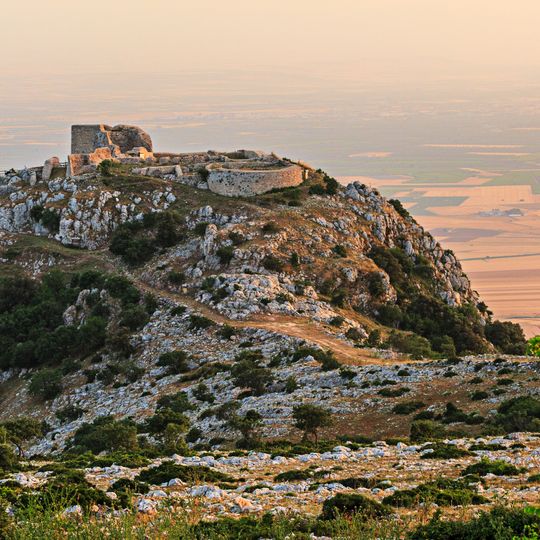
Castelpagano is a ruined hilltop castle on a spur of the Gargano at 514–545 m in Apricena. What remains is a wall about 50 m long and no more than 1.5 m high, with two openings that were once doorways with worked jambs. It joins a round tower under 5 m tall on the right and a short wall stub on the left; a third wall closes a rectangle to the south, where a main tower with five faces rises 6–7 m.
The castle's foundation is uncertain, possibly dating to the second half of the 9th century, before Apricena. It was already flourishing in the 11th century under the Norman count Henry, then passed to Rainulf Drengot and Ruggero of Rignano after a long war. In 1137 it fell to Lothair III, who invaded Italy at the urging of Pope Innocent II; the battle caused hundreds of victims. Frederick II later restored it for hunting and installed a Saracen garrison, from whom the name derives.
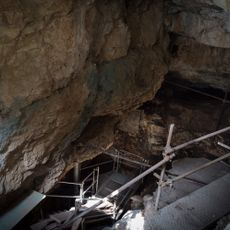
The name Castelpagano comes from the Saracen garrison installed by Frederick II, since non-Christians were called pagani. Local legend tells of a Saracen prince who went mad trying to build a bridge of animal skins to reach a princess on Monte della Donna. Near the ruins, the Lia cave, about 200 m deep, sheltered brigands in the 14th century.
The ruins sit on elevated terrain which can be challenging to reach in certain weather conditions. Sturdy footwear is advisable, and checking local conditions beforehand helps ensure a safer visit.
The name Castelpagano comes from the Saracen garrison installed by Frederick II, since non-Christians were called pagani. In the surrounding area, excavations found many wells and cisterns, and human remains suggesting a cemetery of the abandoned village. The Lia cave, about 200 m long, sheltered brigands in the 14th century.
The community of curious travelers
AroundUs brings together thousands of curated places, local tips, and hidden gems, enriched daily by 94,542 contributors worldwide.