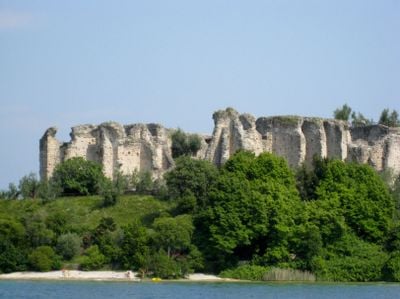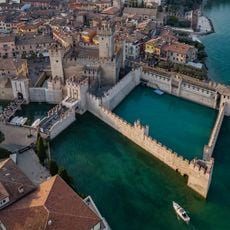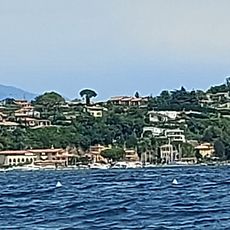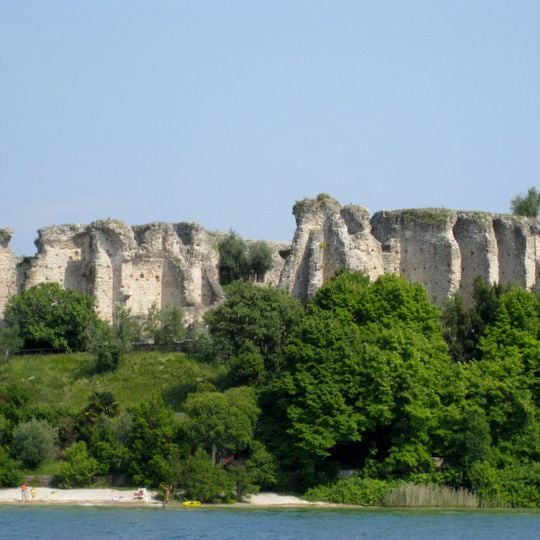
Grottoes of Catullus, Archaeological site in Sirmione, Italy.
The Grottoes of Catullus are the ruins of a Roman villa on the Sirmione peninsula at Lake Garda, built on a rectangular plan of 167 by 105 metres with projecting wings on the north and south short sides. The northern part rests on massive substructures cut into the rock, while the western side preserves a long covered walkway, the cryptoporticus. A large terrace with a velarium faced the lake, and a cistern nearly 43 metres long lies beneath an opus spicatum floor on the south side.
The villa was built in the early 1st century AD over structures from the 1st century BC. It was already abandoned by the 3rd century, when its decoration was reused in the Roman villa of Via Antiche Mura. Between the 4th and 5th centuries its walls were incorporated into Sirmione's fortifications and burials were made inside the ruins.
The name Grotten came from medieval times when collapsed vaults resembled caves, later linked by scholars to poet Catullus. Visitors walk today through what were once reception rooms and gardens designed for entertaining guests.
The visit runs along the western cryptoporticus, a long covered walkway, and past the Grande Oliveto, the central olive grove. Ground is uneven and partly exposed, so wear sturdy shoes and bring water in summer. The archaeological museum stands to the right of the entrance.
The name "Grottoes" comes from the 15th century, when the ruins were so overgrown they looked like caves. In 1483 Marin Sanudo the Younger first linked them to Catullus, though the visible villa was built after the poet's death.
The community of curious travelers
AroundUs brings together thousands of curated places, local tips, and hidden gems, enriched daily by 92,780 contributors worldwide.