Kleines Berlin, Underground air-raid tunnel complex in Trieste, Italy
Kleines Berlin is an underground air-raid bunker system in Trieste with two distinct sections: civilian tunnels built by the municipality and military galleries constructed by German forces. The network reveals different construction approaches, with each section serving different purposes and built using separate methods.
Trieste's municipal shelter tunnels were dug before and during World War II; after Italy's armistice on 8 September 1943 the Germans made the city the capital of the Adriatisches Küstenland and added their own sector. Excavation involved three firms working separately under Organisation Todt, ordered to keep quiet by SS leader Odilo Globočnik. On 1 May 1945 Yugoslav Partisans entered the city and the courthouse linked to the tunnels was among the last German strongholds to surrender.
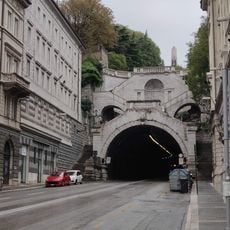
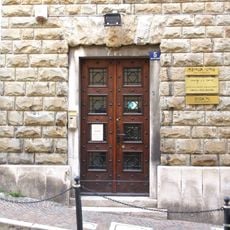
The name "Kleines Berlin" is German for "Little Berlin", though German grammar makes the correct form "Kleines Berlin". The complex lies at the foot of the Scorcola hill, with its main entrance on via Fabio Severo opposite number 11, in the Barriera Nuova district. The Italian sector, built by the municipality of Trieste, kept wooden benches whose floor sockets are still visible, plus a first-aid room and toilets.
Wear sturdy shoes since floor surfaces are uneven and can be slippery in places. Access requires good mobility and comfort with tight corridors and stairs.
In the third gallery on the left of the German sector, traces of a wooden spiral staircase remain; it descended from a shaft above through which Odilo Globočnik climbed down from his villa to reach his offices in the Trieste courthouse without going outside. The passage's existence was likely unknown to the Yugoslav Partisans who surrounded the courthouse in May 1945.
The community of curious travelers
AroundUs brings together thousands of curated places, local tips, and hidden gems, enriched daily by 93,069 contributors worldwide.