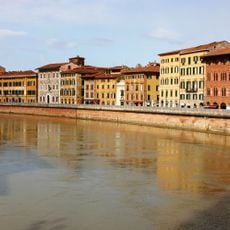
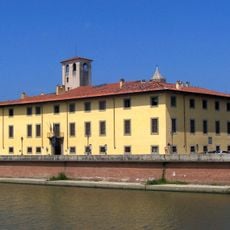
Palazzo Agostini, Gothic palace on Lungarno Pacinotti, Pisa, Italy
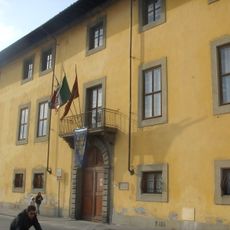
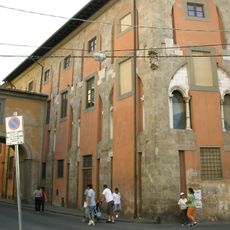
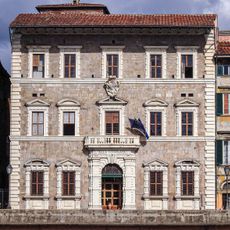
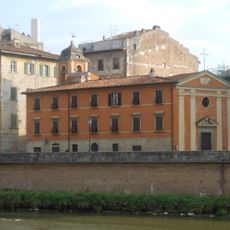
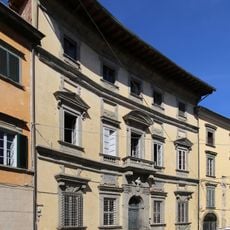
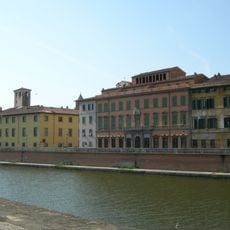
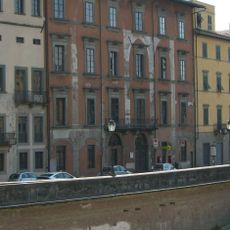
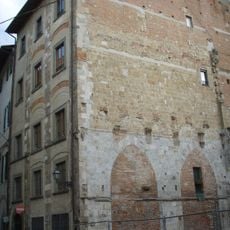
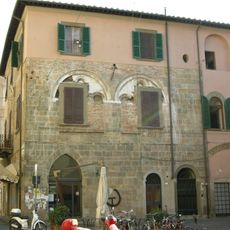
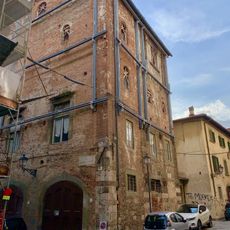
Palazzo Agostini, known as Palazzo Rosso, is a Gothic palace on Lungarno Pacinotti in Pisa. Its facade of red terracotta modules is divided by five brick pilasters running from street to roof, decorated with coats of arms and plant motifs. The ground floor has four low arches that once housed shops, while the upper floors have bifora and trifora windows with marble columns. The facade leans slightly to the right due to ground settlement.
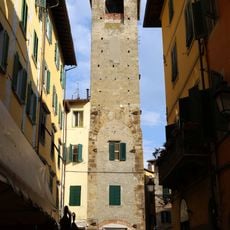
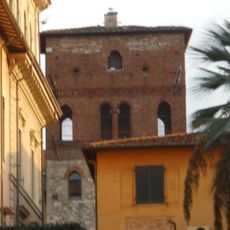
In the first half of the 14th century the Astajo family built the palace by merging two older tower houses beside the Assopardi tower, entrusting the work to architects probably trained under Giovanni Pisano. The Florentine Visdomini sold it in 1465 to the da Capannoli goldsmiths, and on 25 November 1496 Nicolao da Capannoli ceded it to Mariano and Pietro Agostini, a silk-trading family. Restored in 1895 by architect Angelo Giannini, it gained its roof canopy that 12 May, built by Luigi Corona to a design by Luigi Del Moro.
The ground floor houses Caffè dell'Ussero, established in 1775 as a gathering place for students and intellectuals. This café continues to shape the cultural life along the river and shows how the palace functioned as a center for exchange.
The building is easy to locate along Lungarno Pacinotti and remains under private ownership of the Agostini family. The open space along the riverbank and direct location allow simple viewing from outside and convenient access to the ground floor cafe.
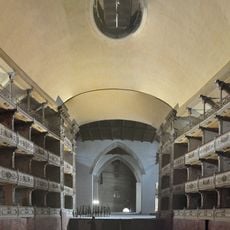
The palace has housed the Cinema Lumière since 1899, making it one of Italy's earliest cinema venues; the theatre was built into the palazzo itself. The Caffè dell'Ussero, open since 1775, hosts the Accademia Nazionale dell'Ussero, so the same building has served coffee, films and learned gatherings for over two centuries.
The community of curious travelers
AroundUs brings together thousands of curated places, local tips, and hidden gems, enriched daily by 94,069 contributors worldwide.