Diocesan Museum of Ancona "Mons. Cesare Recanatini", Religious art museum in Ancona, Italy.
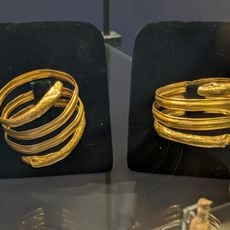
The Diocesan Museum is a religious art museum in Ancona, Italy, spread across two floors and displaying around 460 works. Its collection includes religious artifacts, paintings, sculptures, and liturgical objects from different periods.
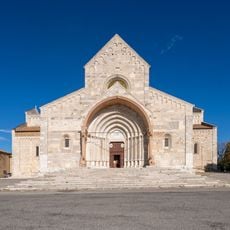
The museum began in 1834, when bishop Cesare Nembrini Gonzaga set up a collection of Christian antiquities in the Crypt of Tears beneath the Cathedral of San Ciriaco. After the crypt was devastated by the 1943 bombings, it reopened in 1952 in the Old Episcopate under Msgr. Cesare Recanatini. Damage from the 1972 earthquake kept it closed until 1993, and a landslide on Colle Guasco closed it again until 2 May 2008.
The ground floor holds finds from the first Christian centuries in Ancona, among them the monumental sarcophagus of Flavius Gorgonius, a late Roman marble piece of the 4th century carved with the twelve gates of the heavenly Jerusalem. The 11th-century Byzantine cloth that wrapped the body of Saint Cyriacus is displayed here, together with the medieval plutei from the Cathedral.
The museum occupies the old bishop's palace beside the Cathedral of San Ciriaco on the Guasco hill, so the approach is uphill and on foot. It reopened on 2 May 2008 after the landslide of December 2004 closed it. The visit runs over two floors, with early Christian finds on the ground floor and the picture gallery above.
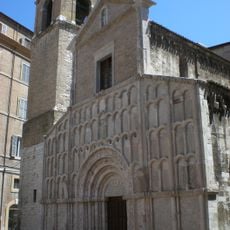
Among the medieval plutei from the Cathedral is the portal of the Romanesque church of San Pietro, destroyed by bombing in World War II; the portal itself was not rebuilt but moved here. The ground floor also holds the 4th-century marble sarcophagus of Flavius Gorgonius, carved with twelve gates of the heavenly Jerusalem.
The community of curious travelers
AroundUs brings together thousands of curated places, local tips, and hidden gems, enriched daily by 92,805 contributors worldwide.