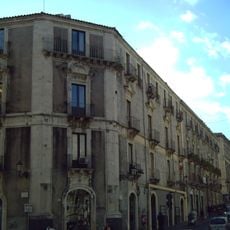
Palazzo San Giuliano, Catania, Baroque palace in Catania, Italy
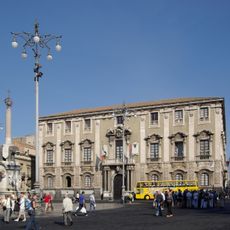
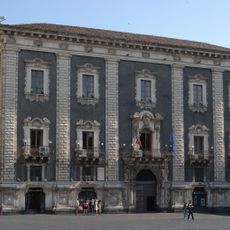
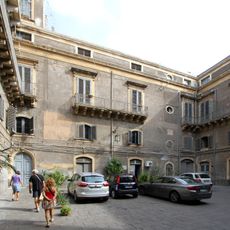
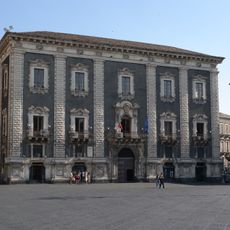
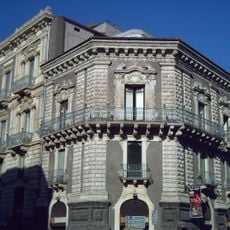
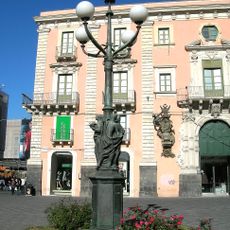
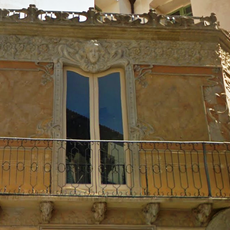
Palazzo San Giuliano faces the University building across Piazza Universitaria. Its central section has a large polychrome marble portal flanked by two marble columns, with an honour tribune above, attributed to Giovanni Battista Vaccarini. The portal carries two coats of arms, the Paternò Castello on the left and the Asmundo on the right. A double flight of stairs rises from the courtyard to the piano nobile.
Following the destructive 1693 earthquake, architect Giovanni Battista Vaccarini designed this palace for the Marquis of San Giuliano, completing it in 1738. The construction was part of Catania's broader Baroque reconstruction after the disaster.
The entrance portal displays two coat of arms representing the Paternò Castello and Asmundos families, marking the aristocratic connections of its owners. The refined interior elements reflect the wealth and social standing of the families who inhabited the residence.
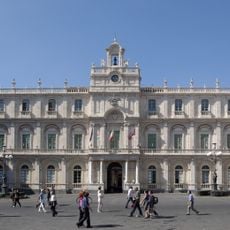
The palace stands in Piazza Universitaria and now houses administrative offices of the University of Catania. Visitors can view the building from outside in the square and explore the surrounding Baroque architecture of the university complex.
The palace's north wing once held a wooden theatre for 600 spectators, the Teatro Machiavelli, created by turning the cellar windows into doors. Its founder's son Giovanni Grasso took his first stage steps there, and the Catania actor Angelo Musco performed in it. The mezzanine and attic floors housed the 60-room Grand Hotel Central de la Couronne, later Hotel Bristol.
The community of curious travelers
AroundUs brings together thousands of curated places, local tips, and hidden gems, enriched daily by 94,060 contributors worldwide.