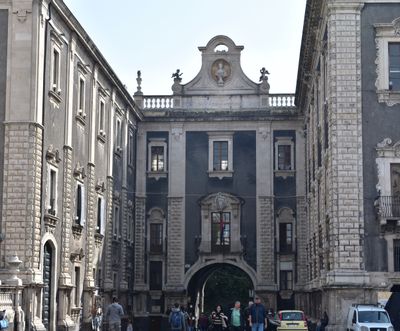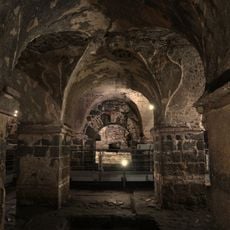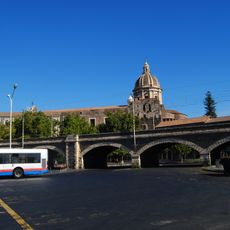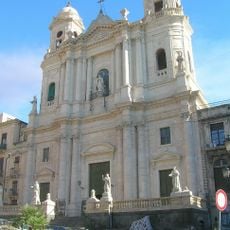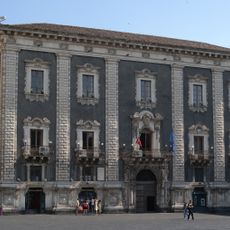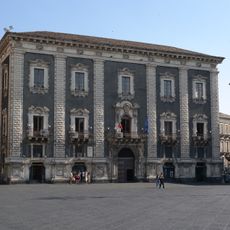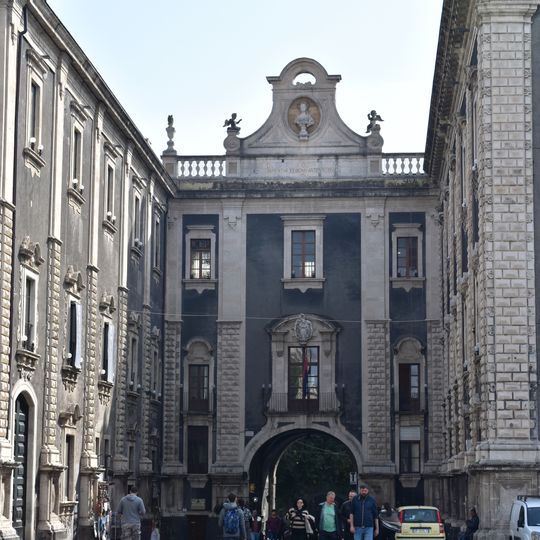
Porta Uzeda, Baroque city gate in Catania, Italy.
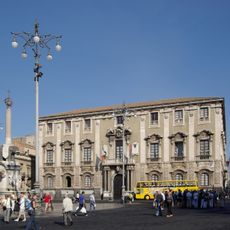
Porta Uzeda is a city gate in Catania built in the Sicilian Baroque style, marked by alternating bands of white marble and black lava stone. It stands as a passage connecting key areas of the historic city center with carefully proportioned arches and detailed stonework.
This gate was built in 1695 as Catania was being reconstructed following the devastating 1693 earthquake that destroyed much of the city. It became part of a larger urban redesign that shaped the layout of the city center as it appears today.
The gate displays how local builders combined black lava stone from the surrounding volcanic landscape with white marble to create a striking pattern still visible today. This blend of materials reflects how craftsmen integrated regional resources into baroque design.
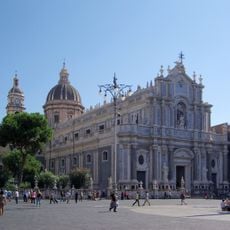
The gate sits near Piazza Duomo and is easy to find from several main streets in the city center. It remains accessible throughout the day and serves as a natural landmark for orienting yourself between different parts of the historic district.
The name comes from Juan Francisco Pacheco Tellez-Giron, Duke of Uzeda, who served as Sicily's viceroy from 1687 to 1696. His title was given to the gate to honor his role in overseeing Catania's recovery following the earthquake disaster.
The community of curious travelers
AroundUs brings together thousands of curated places, local tips, and hidden gems, enriched daily by 91,270 contributors worldwide.