Terme dell'Indirizzo, Roman thermal complex in central Catania, Italy
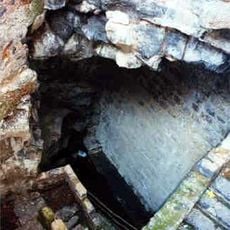
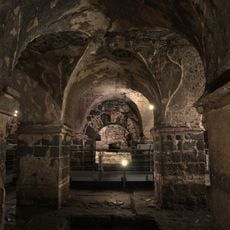
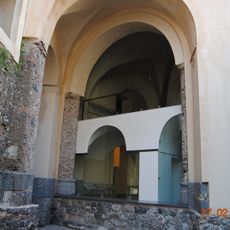
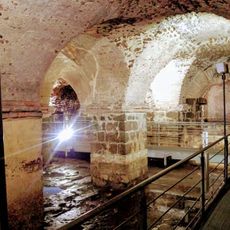
Terme dell'Indirizzo is a small Roman bath complex in Catania with five standing rooms and several secondary spaces. Entry is through a rectangular apodyterium with a niche for a latrine; a monolithic limestone architrave tops the openings to the frigidarium and a tepidarium. The octagonal calidarium has a dome nearly 10 meters high and three rectangular basins, one retaining its suspensurae.
Archaeologists date the baths to the late imperial age, between the 3rd and 5th centuries, when they stood next to the port in a commercial district. In the early 17th century the land passed to the Reformed Carmelite Fathers, and the ruins were used as a warehouse. In the 1770s Ignazio Paternò Castello, Prince of Biscari, studied them and correctly identified them as a bath complex. They became fully visible again in the 1930s, were first restored in the 1980s, and were studied and restored again between 2011 and 2013.
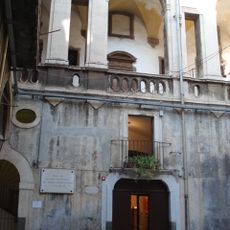
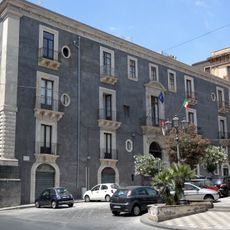
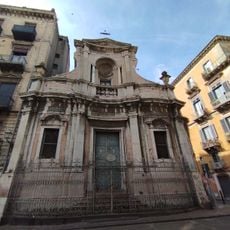
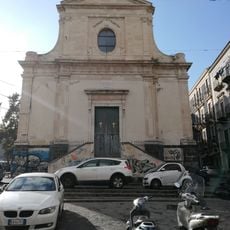
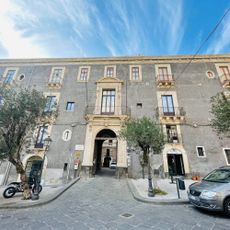
The name comes from the nearby church of Santa Maria dell'Indirizzo and its Carmelite convent, now the Amerigo Vespucci school. A legend says the church's name recalls a light that guided Viceroy Don Pedro Téllez-Girón, Duke of Osuna, to safety in a storm in 1610. In the early 17th century the land passed to the Reformed Carmelites, who first used the ruins as a storeroom.
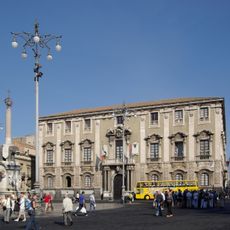
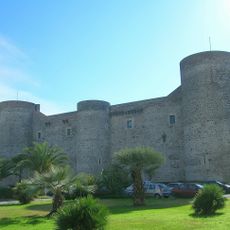
The baths stand in Piazza Currò, a short walk from the Cathedral and Castello Ursino. The visit follows the bathing route: a rectangular apodyterium, then the frigidarium, the trapezoidal tepidarium and finally the octagonal calidarium. Look for the small niche in the north wall of the entrance room, used as a latrine, and the suspensurae still visible under the floor of one of the three basins around the calidarium.
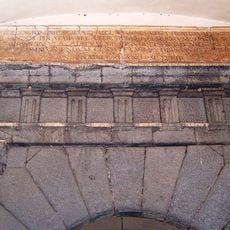
In the octagonal calidarium, look for the suspensurae still visible in one of the three rectangular basins, the raised supports that carried the heated floor. The two doorways linking the apodyterium to the frigidarium and the second tepidarium are each topped by a monolithic limestone architrave; similar blocks found in nearby via Zappalà Gemelli probably belonged to the city's ancient walls.
The community of curious travelers
AroundUs brings together thousands of curated places, local tips, and hidden gems, enriched daily by 92,916 contributors worldwide.