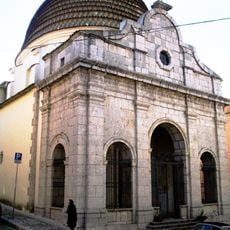
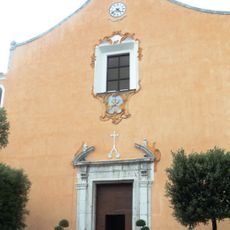
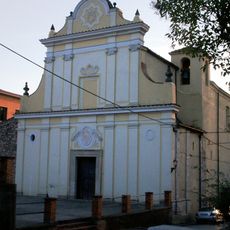
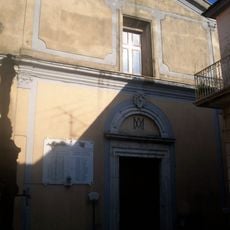
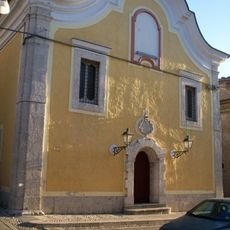
Palazzo Sant'Antonio, Baroque palace in Cerreto Sannita, Italy.
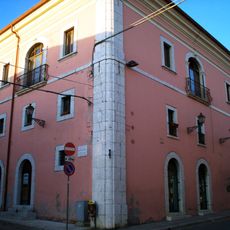
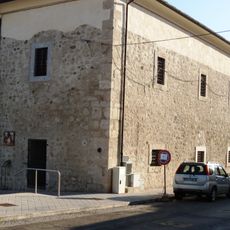
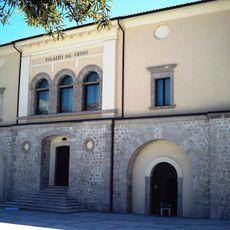
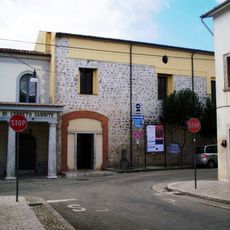
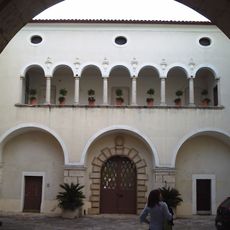
Palazzo Sant'Antonio is a large quadrangular building on Corso Marzio Carafa, at the corner with Via Medaglia d'Oro. Its square cloister has five arches per side, and twenty Cerreto ceramic panels are set into the pavement of its bays, showing the town's monuments, figures and traditions. The former Minorite monastery now houses municipal offices and the Museo civico e della ceramica cerretese.
The Franciscan monastery was founded around 1240 in Cerreto Antica; in 1244 Salomone di Girardo donated three vegetable plots. The 5 June 1688 earthquake killed fifteen of seventeen friars, and the two survivors rebuilt the monastery in the new town planned by Giovanni Battista Manni. Bishop Giovanni Battista de Bellis was buried in its church in 1693. After Giuseppe Bonaparte suppressed the convent, the building became municipal offices in the early 20th century.
The ceramic panels embedded in the cloister floor depict local monuments, key figures, and traditions of the community through artistic imagery. They show how residents have chosen to represent their heritage visually.
The palazzo is easily located along Corso Marzio Carafa and visitors can access both the museum and the cloister within the same complex. The administrative areas operate during standard office hours while the museum space remains available during designated times.
The cloister floor holds twenty ceramic panels made in Cerreto, arranged by wing: arts and industries in the east, monuments outside the historic centre in the south, monuments inside it in the west, coats of arms in the north. Three corner panels show the successive Cerreto settlements.
The community of curious travelers
AroundUs brings together thousands of curated places, local tips, and hidden gems, enriched daily by 94,481 contributors worldwide.