Porta Pia, Baroque city gate in Ancona, Italy.
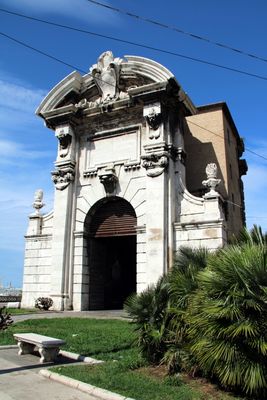
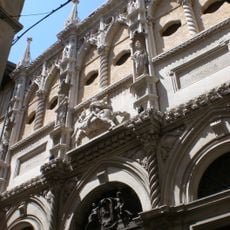
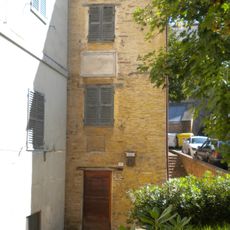
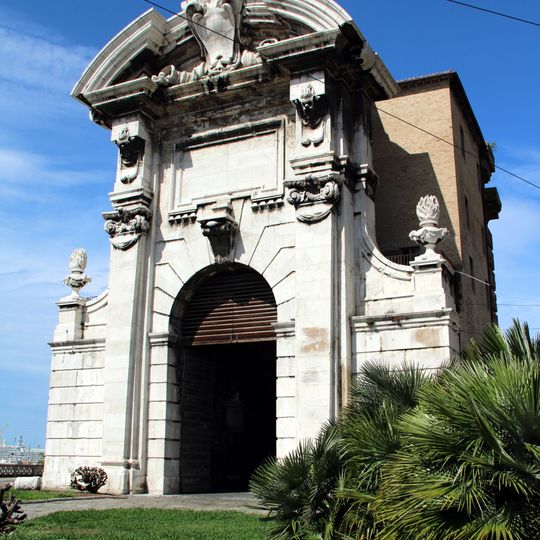
Porta Pia is a single-arch gate in Ancona built 1787–1789 to Filippo Marchionni's design, framed by two pilasters and massive buttresses as tall as the impost band, all in smooth Istrian stone blocks. The outer face toward the Lazzaretto carries a neo-16th-century Ionic order with shell volutes, sea-monster masks and a female figure in an ostrich-plumed helmet; the inner face, by Scipione Daretti, is plain tufa ashlar.
Porta Pia was built between 1787 and 1789 on a design by Filippo Marchionni, commissioned by Pope Pius VI, whose name it bears. It opened a new monumental entrance in the city walls halfway along the flat access road from the north, created in 1783 after Luigi Vanvitelli's harbour works. The outer baroque facade is in Istrian stone, while the inner face by Scipione Daretti uses rough tufa blocks. The papal coat of arms and dedication inscription were chiselled away during the French occupation.
The gate displays Ancona's connection to the sea through decorative details like sea monster masks and shell-adorned capitals in place of traditional ionic volutes. These elements reveal how the city's maritime identity shaped even its monumental architecture.
The gate is accessible and both facades are visible from street level on either side. Visitors can walk around the structure to see the contrast between the ornate exterior and simpler interior face without special entry requirements.
The dedication plaque above the arch and the coat of arms of Pius VI in the broken curved pediment were both chiselled away during the Napoleonic occupation, so the central panel sits blank today. The papal crest was flanked by two cornucopias.
The community of curious travelers
AroundUs brings together thousands of curated places, local tips, and hidden gems, enriched daily by 93,128 contributors worldwide.