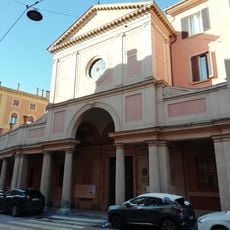
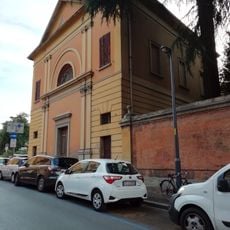
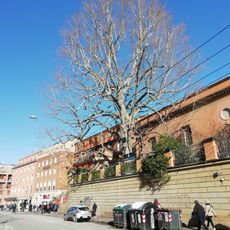
Porta Saragozza, Medieval city gate in Bologna, Italy
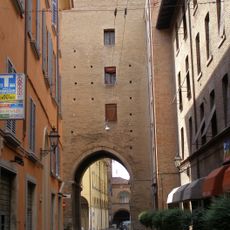
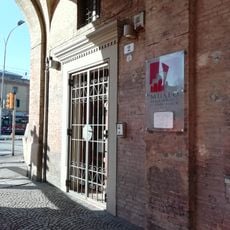
Porta Saragozza is a gate in Bologna's third ring of walls, where the via Porrettana toward Casalecchio meets the Circonvallazione avenues. Its present form dates from the 1857–1859 reconstruction by Enrico Brunetti Rodati, completed by Giuseppe Mengoni: a central cassero linked by crenellated arches to two cylindrical side towers. A plaque on the outer face records the work.
Porta Saragozza was first built in the 13th century as part of Bologna's third wall circuit and was fitted with a drawbridge in 1334. It remained a secondary passage until 1674, when the Portico di San Luca made it the starting point for processions to the sanctuary. Between 1857 and 1859 Enrico Brunetti Rodati led a radical reconstruction, completed by Giuseppe Mengoni, who added the cylindrical side towers and a new central keep.
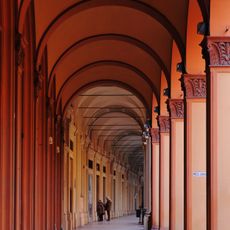
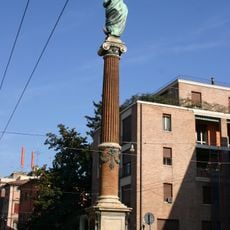
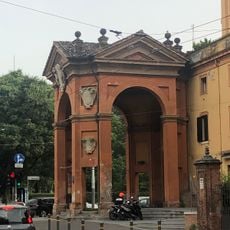
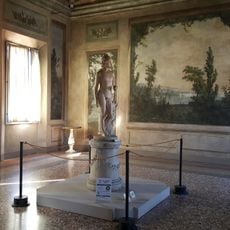
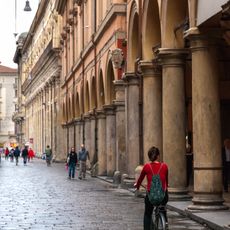
In 1674 the long portico to the Sanctuary of the Madonna di San Luca was built, and Porta Saragozza became the starting point of the annual procession with the sacred icon, replacing Porta Sant'Isaia. The gate was then also called Porta Sacra or Porta dei Pellegrini. Since 2004 the cassero has housed the Museo della Beata Vergine di San Luca, built around Antonio Brighetti's collection.
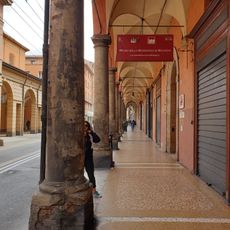
The gate stands where the via Porrettana toward Casalecchio meets Bologna's ring boulevards, at the start of the 1674 portico to San Luca. The walkway begins just beyond the arch, so walkers can set off from the gate itself. A plaque on the outer face records the 1857–1859 rebuilding.
Giuseppe Mengoni, who rebuilt the gate in 1859, is today far better known as the designer of the Galleria Vittorio Emanuele II in Milan, which he completed just over a decade later. The gate in Bologna was one of his earlier works, created before he became widely recognized.
The community of curious travelers
AroundUs brings together thousands of curated places, local tips, and hidden gems, enriched daily by 94,049 contributors worldwide.