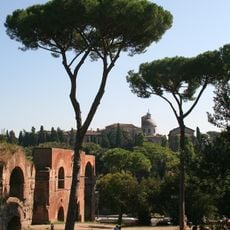
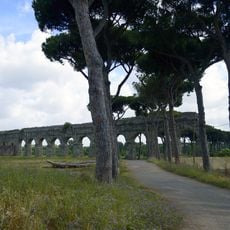
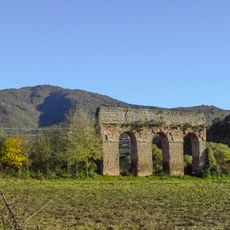
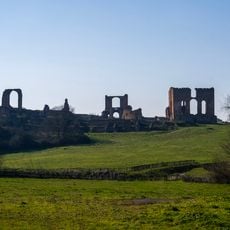
Villa of the Sette Bassi, Roman villa ruins at Via Tuscolana, Italy.
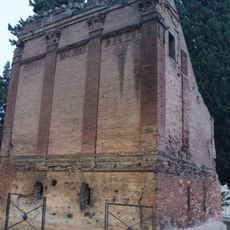
The Villa of the Sette Bassi is a Roman villa on a hilly plateau at the fifth mile of Via Tuscolana, southeast of Rome. Its residential area consists of three contiguous buildings arranged east to west around a porticoed garden: the easternmost, built between 134 and 139 under Antoninus Pius, measures 50 m per side with a peristyle of about 45 m per side; the second, built between 140 and 150, measures 45 x 25 m and has a south-facing rotunda; the third, from the end of Antoninus Pius's reign, contains large bath halls. A rectangular hippodrome-garden, 95 x 327 m, lies within the complex.
The villa was built in the middle of the 2nd century under Emperor Antoninus Pius and went through several construction phases, each bringing new improvements. The site was used and modified over generations until it was eventually abandoned.
The residence shows how wealthy Romans lived, with spaces for receiving guests and private areas for the family. Gardens and bath complexes were important places for socializing and daily routines.
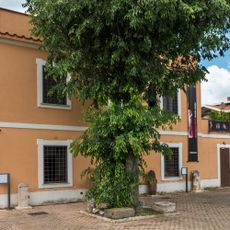
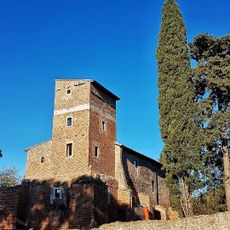
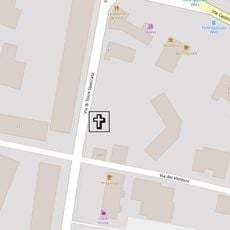
Access is from Via Tuscolana 1700, where a long tree-lined avenue leads to a farmhouse built around the early 1900s, when the area belonged to the Torlonia agricultural estate. The site can currently be visited only on request or during special openings. The ruins are in poor condition, and a buttress collapsed in February 2014.
Six marble sculptures from the villa are held at the British Museum. The water supply came from a branch of the Anio Novus aqueduct feeding a system of cisterns, one of them on two floors; remains of a cistern form the foundations of a farmhouse on the property.
The community of curious travelers
AroundUs brings together thousands of curated places, local tips, and hidden gems, enriched daily by 93,807 contributors worldwide.