Aqua Claudia, Roman aqueduct in Rome, Italy
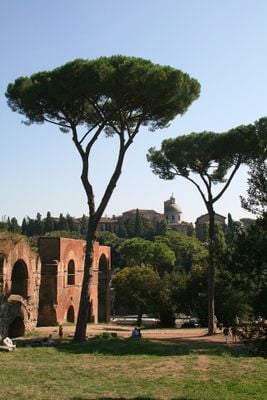
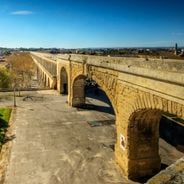
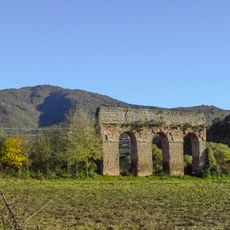
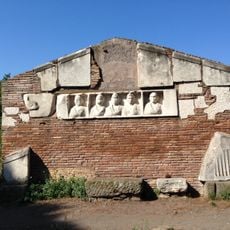
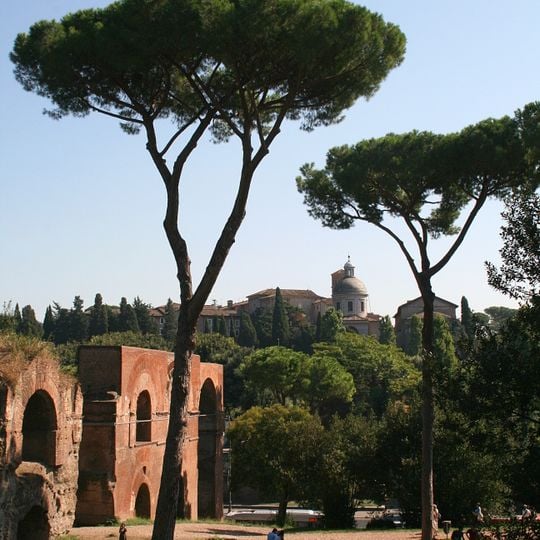
Aqua Claudia is a Roman aqueduct begun by Caligula in 38 AD and completed by Claudius in 52 AD, running about 69 km from springs near the 38th milestone of the Via Sublacensis to Rome. Most of its course was underground; near the city it emerged onto arches that rose over 30 m. The surviving brick-faced stretch shown here has four arched openings, and its channel, the specus, was about 1.14 m wide and 1.75 m high.
Caligula began the aqueduct in 38 AD and Claudius completed it in 52 AD, though Tacitus suggests it was already in use by 47 AD. It was the eighth aqueduct of Rome. Vespasian repaired it in 71 AD after a period of disuse, Titus repaired it again in 81 AD, and brick stamps record restorations under Hadrian in 123 AD. Belisarius and Pope Adrian I later oversaw further repairs.
The name Aqua Claudia honours the emperor who completed it in 52 AD, Claudius. Frontinus, water commissioner under Nerva, described the aqueduct in his treatise De aquaeductu. The church of San Tommaso in Formis was later built into the side of the aqueduct, and the arches of Nero, the arcus Caelimontani, were reinforced by Alexander Severus.
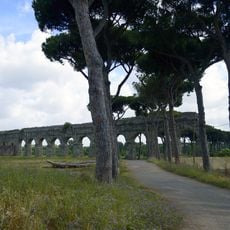
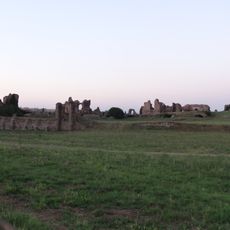
Several well-preserved sections stand along Via Lemonia and around Porta Maggiore on the eastern side of the city. The ruins are best seen in daylight when the sun highlights the contours of the arches.
At Tor Fiscale the Aqua Claudia crossed over the Aqua Marcia twice, enclosing a trapezoidal area about 300 m long known as Campo Barbarico. In 539 the Goths of Vitige blocked its arches and used it as a fortification against Belisarius, who was defending Rome.
The community of curious travelers
AroundUs brings together thousands of curated places, local tips, and hidden gems, enriched daily by 94,670 contributors worldwide.