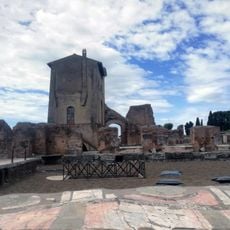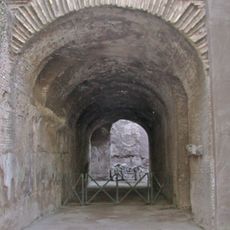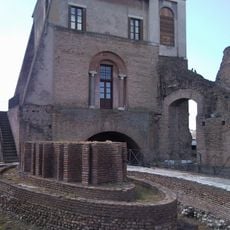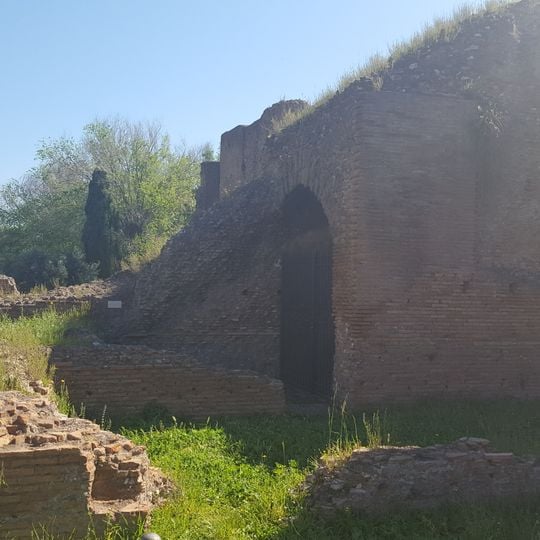
Casa dei Grifi, Archaeological site on Palatine Hill, Rome, Italy
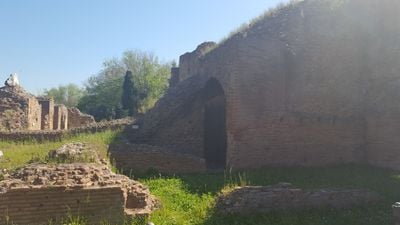
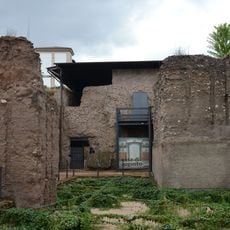
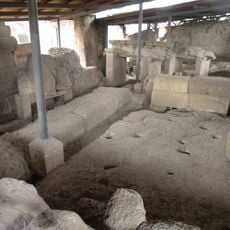
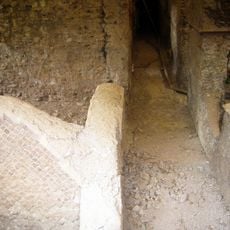
Casa dei Grifi is a Roman Republican house on the Palatine Hill, cut by the foundations of Domitian's palace and visible only in part. Its walls of opus incertum, with later opus quasi reticulatum repairs, preserve the oldest known Second Style paintings in Rome and an opus scutulatum floor. The best decorations were detached and are kept in the Palatine Antiquarium.
The house was cleared in 1722 by the Duke of Parma, then excavated between 1910 and 1913 by Giacomo Boni. Its ancient name is unknown; the present one comes from the stucco griffins. The plan and decoration suggest a noble Roman's home, a contemporary of Cicero or Crassus.
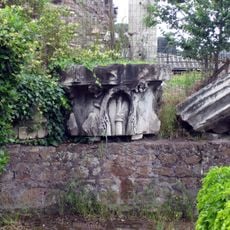
The name comes from a stucco lunette showing two griffins flanking a vine growing from an acanthus tuft, in a room whose vaults and lunettes keep the only stucco reliefs. The wall paintings sit between the first and second Pompeian styles, and the second-style paintings here are the oldest known of that type.
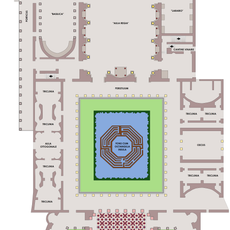
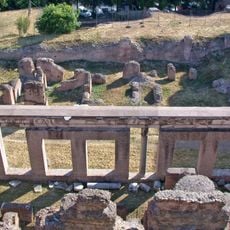
The house lies beneath the north wing of Domitian's palace, cut by the foundations of the palaces of Nero and Domitian, so only part of it is visible and its overall plan cannot be read. The ground floor was largely underground and was abandoned and buried while the upper floor was still in use. The best detached paintings are now in the Palatine Antiquarium, so check there for the removed decoration.
The name comes not from a fresco but from a stucco lunette showing two griffins flanking a vine growing from an acanthus tuft. The relief survives on a vault or lunette, while the wall paintings were detached and moved to the Palatine Antiquarium.
The community of curious travelers
AroundUs brings together thousands of curated places, local tips, and hidden gems, enriched daily by 92,587 contributors worldwide.