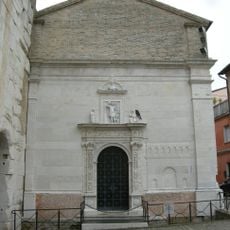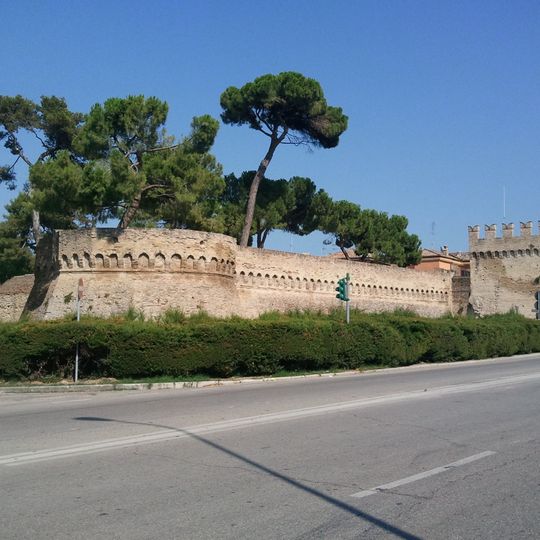
Fano city walls, Ancient defensive walls in Fano, Italy
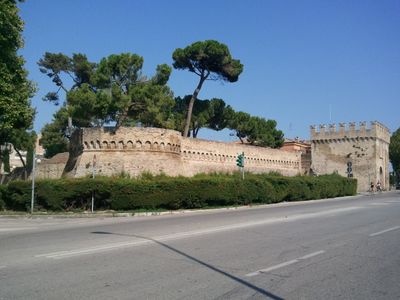
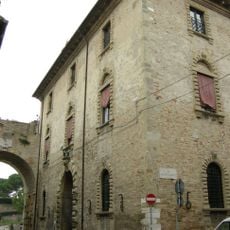
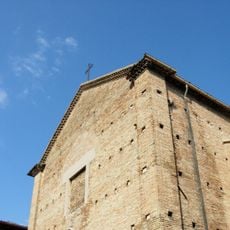
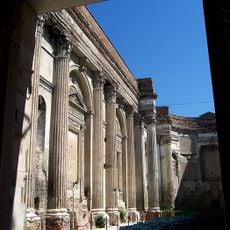
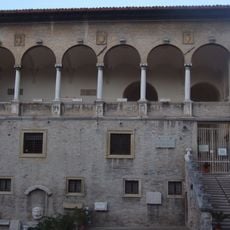
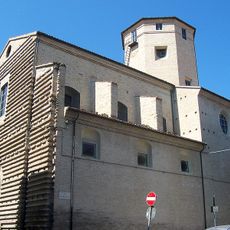
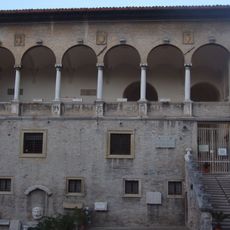
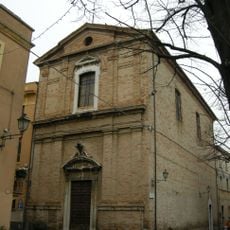
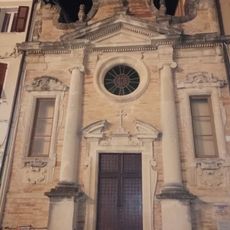
The city walls of Fano are stone barriers that ring the historical center, featuring multiple gates and architectural elements from different construction periods. They run partly along modern streets and form a visible ring around older districts.
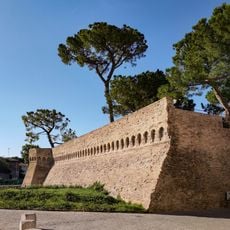
The first circuit was built under Augustus as part of the Colonia Julia Fanestris and finished in 9 AD, in opus vittatum sandstone blocks with mortar and stone-chip fill, pierced by twelve cylindrical towers. In 1357 Fano passed to the Malatesta, and in the 15th century Sigismondo Pandolfo extended the walls, adding a new arm facing the Roman line, the Porta Maggiore by Matteo Nuti (1464) before the Arco di Augusto, and the trapezoidal Rocca Malatestiana with its moats. Under papal rule Julius III had the Sangallo bastion built at the south-east corner in 1552, the only work the popes carried out.
The Arco d'Augusto stands integrated within the walls and shows how Roman structures were preserved through the centuries. The gates and wall segments display different styles that reflect various periods of the city's evolution.
The best starting point is Via Arco d'Augusto, from where several entry points to the walls are accessible. Walking around the walls is straightforward and allows you to explore different historical neighborhoods.
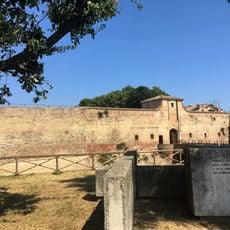
The walls still stand for about two thirds of their original circuit, in the north-west part of Fano. Of the twelve cylindrical towers of the Roman curtain, only eight remain. The Arco di Augusto marked the exit of the Via Flaminia towards Pisaurum.
The community of curious travelers
AroundUs brings together thousands of curated places, local tips, and hidden gems, enriched daily by 93,010 contributors worldwide.