Naumachia Augusti, Artificial lake in Trastevere, Italy
Naumachia Augusti was a large rectangular basin on the right bank of the Tiber in Trastevere designed to hold water spectacles for thousands of spectators. The Aqua Alsietina aqueduct supplied the water, and the basin reached a depth of about 1.5 meters (5 feet).
Augustus had the basin excavated in 2 BCE on the right bank of the Tiber, in the Grove of the Caesars, and that year staged a reenactment of a Persian–Athenian naval battle with about thirty ramming ships and some 3,000 combatants. Nero held boat festivities there in 59 CE, and Titus used the "old naumachia" in 80 CE for gladiatorial combats, a hunt of 5,000 animals and a naval battle. Rubble from the 80 CE fire probably filled the basin under Titus and Domitian, and Cassius Dio could still partly recognize it around 200–240 CE.
The shows were staged as reenactments of named historical battles: in 2 BCE Augustus presented a clash between Persians and Athenians, and in 80 CE Titus had the Athenian conquest of Syracuse performed, ending with soldiers storming a wall on the artificial island. The surrounding grove was dedicated to Augustus's grandsons Gaius and Lucius Caesar.
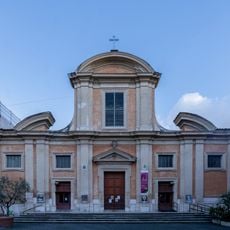
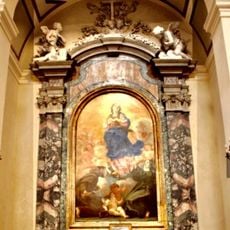
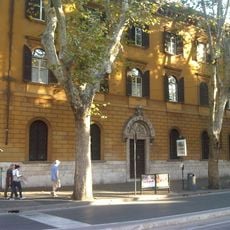
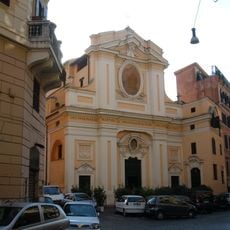
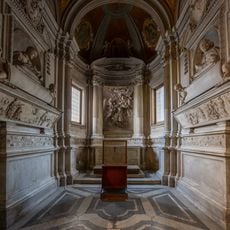
The basin lay on the plain now occupied by the San Cosimato monastery and its square, so there is no monument to walk through: the site is under the convent and surrounding streets. Look for the square and church as the reference points, and treat the Forma Urbis fragment 471, with its parallel lines, as the only plan trace of the stands.
The basin's water came from the Aqua Alsietina, an aqueduct Augustus built in 2 BCE for this purpose; Pliny the Elder records that it took 15 days to fill the basin. Ships reached the water from the Tiber through a navigable canal crossed by a movable bridge, the pons naumachiarius.
The community of curious travelers
AroundUs brings together thousands of curated places, local tips, and hidden gems, enriched daily by 94,466 contributors worldwide.