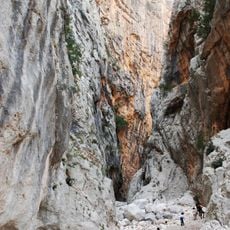
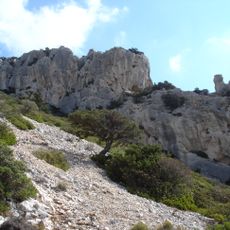
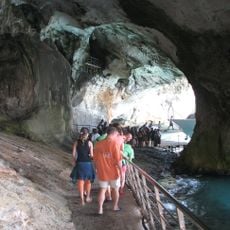
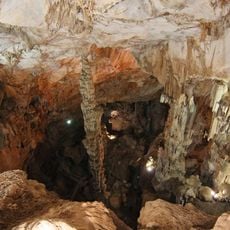
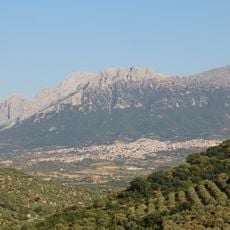
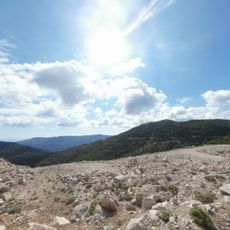
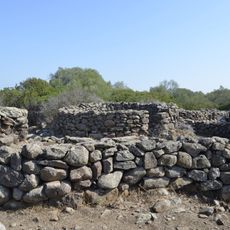
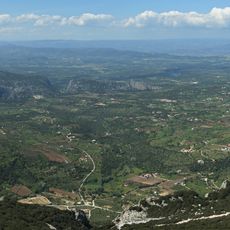
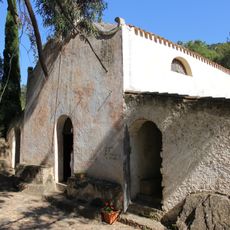
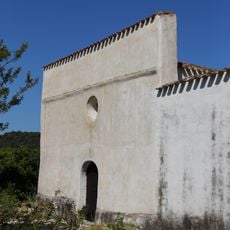
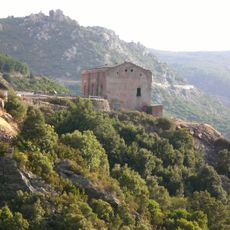
Corbeddu Cave, Archaeological park and cave entrance in Oliena, Italy
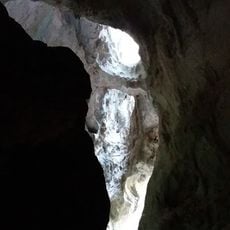
Corbeddu Cave lies in the territory of Oliena, province of Nuoro, and runs about 130 metres through three chambers (four in the Italian sources). It is named after the bandit Giovanni Corbeddu Salis, who took refuge inside. Excavations produced human remains, bone and stone tools, and bones of extinct animals such as the Sardinian dhole, the deer Praemegaceros cazioti and the lagomorph Prolagus sardus.
Corbeddu Cave has yielded a human finger bone that some researchers dated to about 20,000 years ago, a claim contested by others who see no solid evidence of humans on Sardinia-Corsica before the early Mesolithic, around 10,000 years ago. Human jaw and temporal bones from about 8,750 years ago were also found, and bone and stone tools of local limestone date to between 14,600 and 12,500 years ago. Pottery of the Bonu Ighinu Neolithic culture and Early and Middle Bronze Age ceramics and obsidian show later use.
The cave is named after Giovanni Corbeddu Salis (1844–1898), a Sardinian bandit who used it as a refuge; his dates and role are recorded in local accounts. The name passed from the outlaw to the cave itself, and it is by that name that the site is known today.
The paths inside the cave and park are marked, but sturdy footwear is a good idea since the ground can be uneven in places. Visiting outside the hottest summer months makes the experience noticeably more comfortable.
The cave contained bones of animals that lived only on Sardinia and are now extinct, including a wild dog, a giant deer, and a type of rodent found nowhere else. These bones show how the island's animal life changed over thousands of years in ways that happened nowhere on the mainland.
The community of curious travelers
AroundUs brings together thousands of curated places, local tips, and hidden gems, enriched daily by 93,733 contributors worldwide.