Bicknell Museum, Natural history and archaeological museum in Bordighera, Italy.
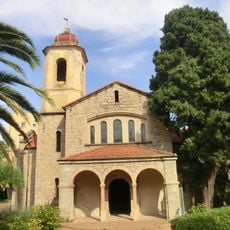
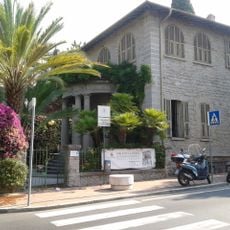
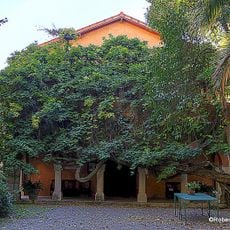
The Bicknell Museum is a small rectangular building at 39 Via Romana in Bordighera, built in 1888 by Clarence Bicknell to hold his archaeological and botanical collections. Its entrance is sheltered by a portico of four Roman-inspired columns, designed by the English architect Clarence Tait. Inside, a podium modelled on Anglican church layouts serves lecturers, and two fireplaces carry Bicknell's floral and animal decoration: the right one bears a Dante quotation, the left the crests of Tait, Giovenale Gastaldi, Francesco Giovannelli and Bicknell.
Founded in 1888 by Clarence Bicknell, it became the region's first museum dedicated to archaeological and botanical study. This establishment marked the beginning of organized heritage preservation in western Liguria.
The museum's name honours Clarence Bicknell, who built it in 1888 to hold his finds from Monte Bego and his botanical collections. Inside, two fireplaces he decorated with floral and animal motifs carry a Dante quotation on the right and the crests of his collaborators — Clarence Tait, Giovenale Gastaldi, Francesco Giovannelli and Bicknell himself — on the left.
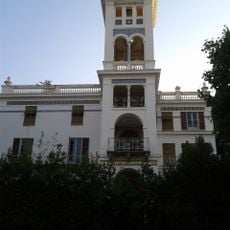
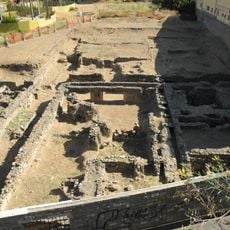
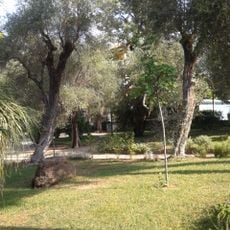
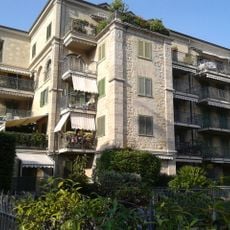
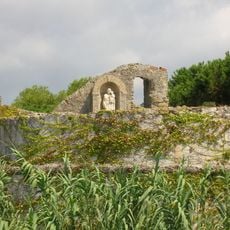
The museum stands at 39 Via Romana, sharing a block with the villa of the International Institute of Ligurian Studies; Via Clarence Bicknell runs to the right of the building and leads to the garden and museum entrance. The rectangular hall has a four-column portico, and the garden holds a fragment of the old Roman road.
The large Ficus macrophylla by the entrance, native to Oceania, has grown around part of the original garden wall and gate grille, which its trunk now encloses. It is listed among Italy's monumental trees by the State Forestry Corps, as is the century-old wisteria shading the museum portico.
The community of curious travelers
AroundUs brings together thousands of curated places, local tips, and hidden gems, enriched daily by 94,056 contributors worldwide.