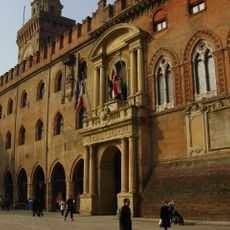
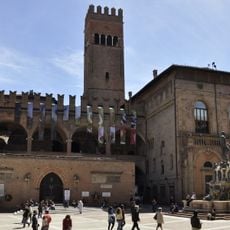
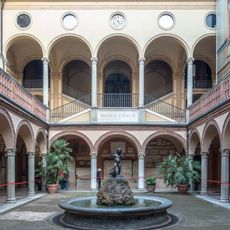
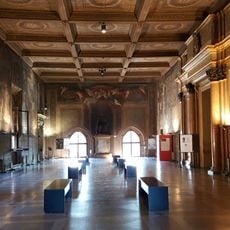
Apollino by Antonio Canova, Neoclassical marble sculpture in Palazzo d'Accursio, Bologna, Italy.
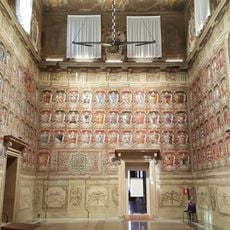
Apollino by Antonio Canova is a marble sculpture made in Rome in 1797, now in Room 16, the Sala Boschereccia, on the second floor of Palazzo d'Accursio in Bologna. It shows the youthful Apollo exulting after defeating the serpent Python, with an ideal face and a slender, polished nude body. The statue rises from its original cylindrical pedestal, once fitted with a swivel mechanism and wrapped in flower garlands like an ancient altar.
Canova created this statue in 1797, an early work of neoclassicism. It traveled to Paris as part of Giovanni Battista Sommariva's collection and returned to Italy in the middle of the 19th century.
The statue displays idealized human forms through polished surfaces and precise anatomical details. This portrayal of youthful Apollo reflects the artistic understanding of beauty and harmony in its era.
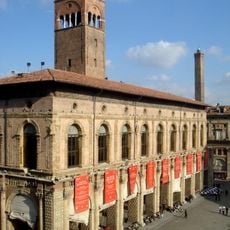
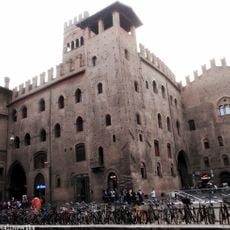
This work is on display in the Bologna City Art Collections at Palazzo d'Accursio on Piazza Maggiore, making it easy to reach. Visiting during daylight hours allows natural light to highlight the fine details of the marble carving.
The base is cylindrical in shape and decorated with floral garlands, a design that echoes ancient altars. This carefully considered foundation contributes to the balance and classical appearance of the work.
The community of curious travelers
AroundUs brings together thousands of curated places, local tips, and hidden gems, enriched daily by 94,641 contributors worldwide.