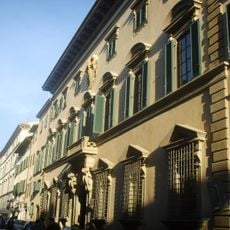
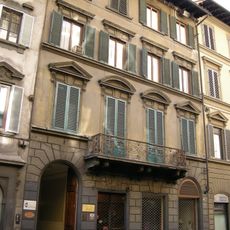
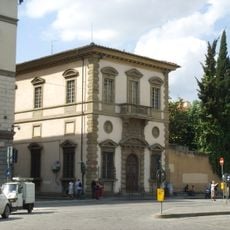
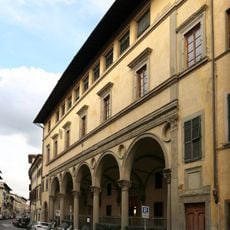
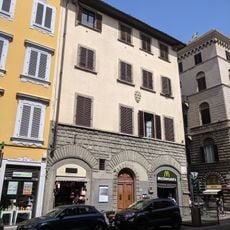
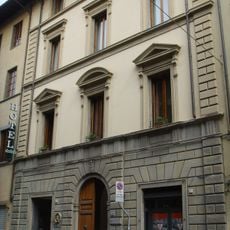
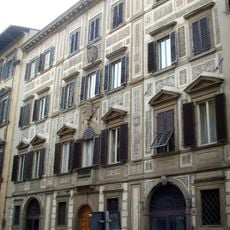
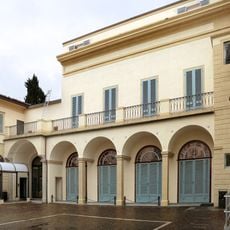
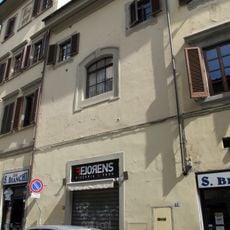
Complesso di Sant'Apollonia, Mannerist architectural ensemble in San Giovanni district, Florence, Italy
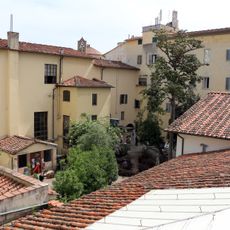
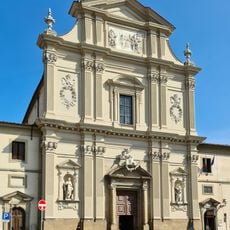
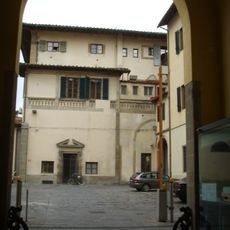
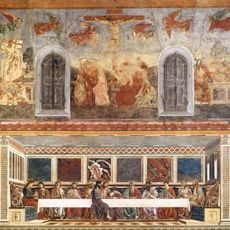
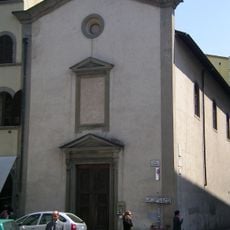
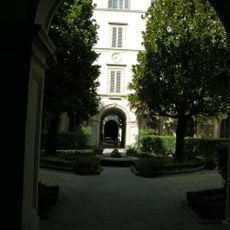
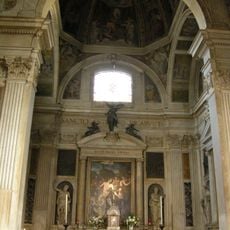
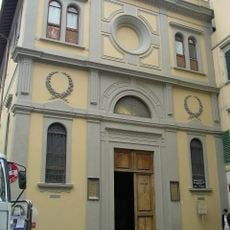
The Complesso di Sant'Apollonia is a former Camaldolese monastery. Its refectory, a rectangular hall with a coffered ceiling and windows on the right wall, holds Andrea del Castagno's 1447 fresco of the Last Supper on one wall. The former church has a single nave, a wooden ceiling with the monastery's pincer emblem, and a quadrangular apse with frescoes by Bernardino Poccetti. The large Cloister of the Abbess, begun in 1442, has two floors and Ionic colonnades on three sides.
Founded in 1339 by Piero di Ser Mino as a Camaldolese monastery, it annexed Santa Maria a Mantignano and San Pietro a Porta Pinti in 1440–41. Abbess Cecilia Donati then obtained Pope Eugene IV's permission to enlarge the cloister and refectory, frescoed by Andrea del Castagno in 1447. Suppressed in 1808 and again in 1866, it became military stores and offices.
The complex is named after Saint Apollonia, invoked against toothache. The nuns were Camaldolese, and their cloistered life kept the refectory, frescoed by Andrea del Castagno in 1447, unknown to Vasari and other early chroniclers. Since 1866 the former monastery has served civil uses, and part of it now houses the student canteen of the University of Florence.
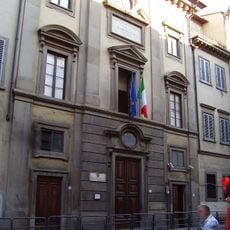
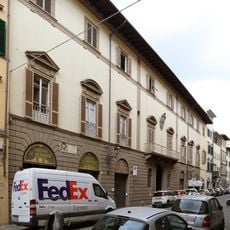
The complex is located at Via XXVII Aprile 1 in Florence and currently functions as a conference center with government offices occupying parts of the building. Check ahead for visiting possibilities, as access may be limited depending on scheduled events or official use.
The Last Supper in the cenacolo, frescoed by Andrea del Castagno in 1447, went unmentioned by Vasari, Bocchi-Cinelli and Richa because the nuns' enclosure kept the room closed. Its artistic value emerged only after the 1808 suppression. The cenacolo was turned into a museum in 1891.
The community of curious travelers
AroundUs brings together thousands of curated places, local tips, and hidden gems, enriched daily by 93,935 contributors worldwide.