Castello di Montalcino, 14th-century military fortress in Montalcino, Italy
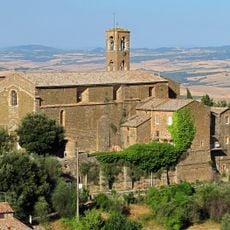
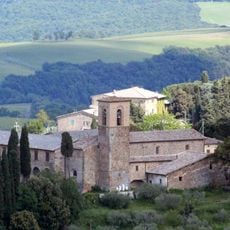
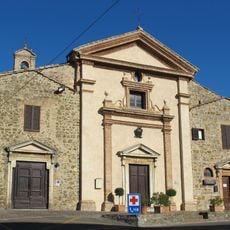
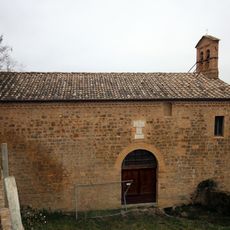
Castello di Montalcino, known locally as the Fortezza di Montalcino, is a roughly pentagonal fortress with a tower at each corner, built from 1361 to 1368 by the Sienese architects Mino Foresi and Domenico di Feo. A ramp leads to the gate beside the north-west tower; inside are the chapel against the north wall, the San Martino keep in the south, and the San Giovanni tower in the west. The walls incorporate older structures, including the San Martino mastio and the left nave of a basilica of San Egidio.
The fortress was built in 1361 under Siena's authority as a defensive stronghold. It later became the scene of the Republic of Siena's final stand against Medici forces in 1555.
The name Montalcino likely comes from the holm oaks (lecci) that still grow on the San Giovanni bastion, a small park added after the fortress surrendered on 31 July 1559. A local legend, still told in the mid-20th century, held that a tunnel from the San Giovanni tower, passable by mule carts, brought supplies to the defenders until an earthquake partly collapsed it.
Access to the fortress is by a ramp leading to the gate beside the north-west tower; from the keep of San Martino a walkway runs along the whole perimeter of the walls. The bastion of San Giovanni, outside the walls and linked to them by a door, holds a small holm-oak garden. The site now serves as a museum and historical park.
The fortress walls absorbed earlier structures: the San Martino keep, the San Giovanni tower and the left nave of a basilica dedicated to Saint Giles. The pentagonal plan was new for its time, replacing the square layouts of earlier fortifications.
The community of curious travelers
AroundUs brings together thousands of curated places, local tips, and hidden gems, enriched daily by 94,676 contributors worldwide.