Roman bridge, Ancient Roman bridge in Fermignano, Italy
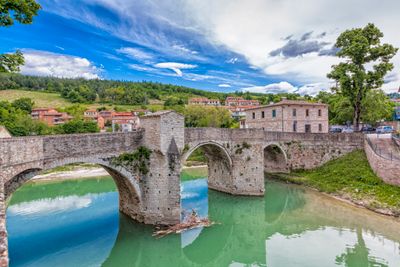
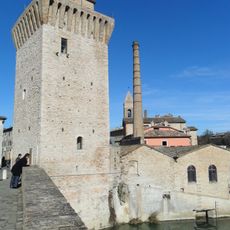
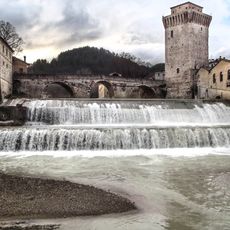
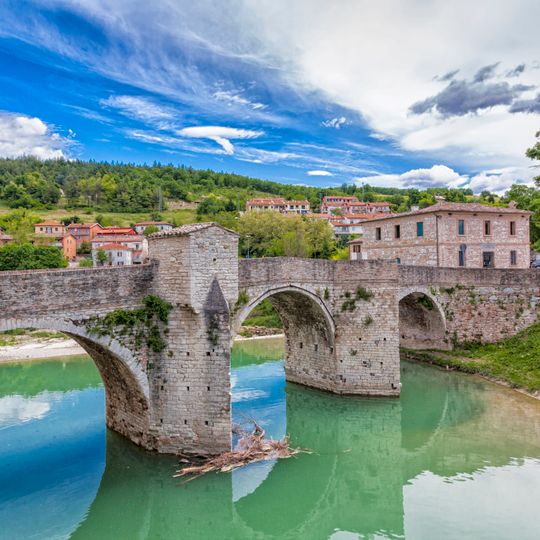
The Roman bridge in Fermignano is a stone structure that spans the Metauro River and displays classical Roman architecture. The structure features several carefully built arches and bears traces of the craftsmanship and precision typical of Roman engineers.
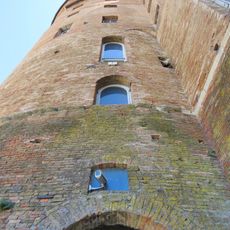
The bridge is first documented in 1364, though local tradition traces it to Roman times; its stone-block and brick construction matches the adjacent medieval tower, and its piers and cutwaters resemble Roman bridges on the Via Flaminia. Sixth-century sources suggest a Metauro crossing existed here during the Gothic-Byzantine war. The Torre delle Milizie, first cited in 1418, formed with the bridge a single complex controlling transit and defending the town.
The name "Roman bridge" comes from local tradition, not from documented Roman construction: the first written mention dates to 1364. Beside it stands the medieval Torre delle Milizie, first cited in 1418, when a town council met inside it. Around 1407 a paper mill was built next to the tower, powered by the Metauro; in 1507 Guidobaldo da Montefeltro gave it to the Cappella Musicale del SS. Sacramento of Urbino.
The location is easy to reach from central Fermignano and parking is available nearby. The best time to visit is during daylight hours when the light is good and you can clearly see the architectural details.
The bridge's stone blocks are interrupted by brick sections added in later restorations, a detail visible along the arches. At its midpoint stands a small votive shrine built for Federico da Montefeltro around the mid-15th century, possibly overseen by Francesco di Giorgio Martini, housing a late-15th-century fresco known as the Madonna del Ponte.
The community of curious travelers
AroundUs brings together thousands of curated places, local tips, and hidden gems, enriched daily by 93,617 contributors worldwide.